11 September 2020
Three years with the European Union in numbers
The «Agricultural Development Model Expansion» project, implemented between 2017 and 2019 and funded by…
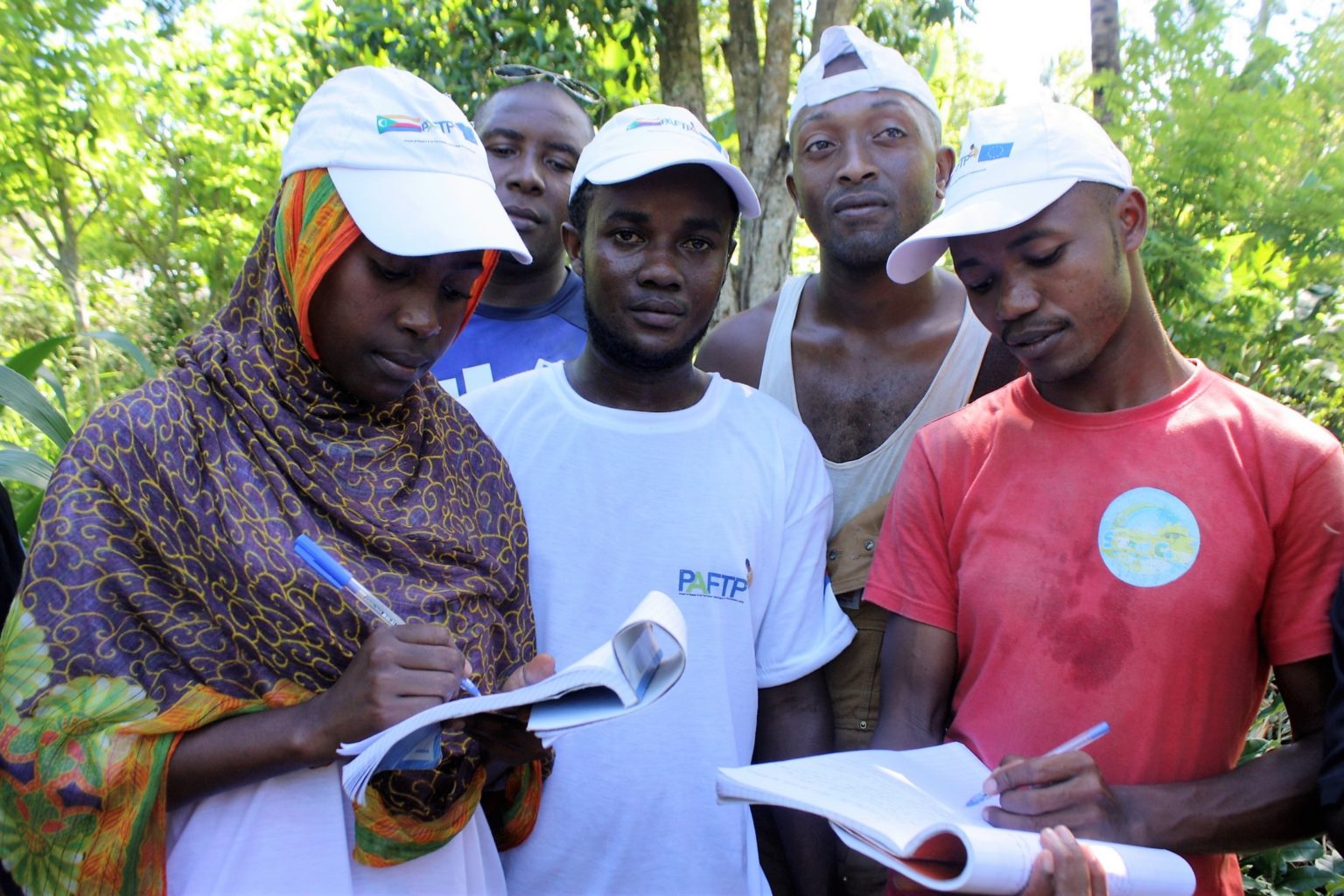
From 27 March to 1Oh In April, the NGO Dahari welcomed students from the National Horticultural Centre of Mvouni for a week-long field training. This study trip was funded by the French Embassy in the Comoros.
The Mvouni National Horticultural Centre (CNH) organised a study trip to Anjouan focusing on innovation in sustainable agricultural techniques. From 27 March to 1Oh In April, 30 postgraduate students and three professors were guided by the NGO Dahari for field training.
For the CNH, the aim of the exchange is to discover agricultural techniques and to promote the farming profession to students. The trip was organised to Anjouan because Dahari is a relevant and high-quality contact to demonstrate innovative agricultural techniques and their application in the field.
« These five days of practical training have allowed us to complete the theoretical instruction that the learners received. The students are very satisfied; they were able to see practical applications of everything they learned in class. I know they will not forget what they saw this week. Furthermore, they understood that farming is a real profession and that they can make a living from agriculture. », specifies the trainer, Mr Ben Attoumane Hamza.

For Dahari, the value of the exchange lies primarily in the opportunity to showcase technical innovations developed with CIRAD and implemented thanks to funding from the European Union and the Franco-Comorian Co-development Programme.
The exchange visit programme included an island tour, from Mutsamudu to Bimbini, with stops in Salamani, Adda, Outsa, Moya and Nindri. At each training location, the visit was divided into three parts: discovery of an area with its specific agricultural production conditions, a meeting phase with producers, and the application of techniques through practical work in the plots. A stop was organised in the village of Salamani to allow the trainees to benefit from Dahari's entire agricultural support programme, organised in partnership with the Salamani/Nganzalé Regional Economic Development Centre (CRDE).
The students addressed the following topics: effective water management, anti-erosion landscaping, permaculture, ensilage, food crop multiplication, integrated pest management, early market gardening techniques, integration of agriculture and livestock, and onion cultivation from sets. They carried out agricultural work including the construction of a cattle pen, sowing onion sets, soil preparation using a permaculture approach, and the establishment of anti-erosion lines.
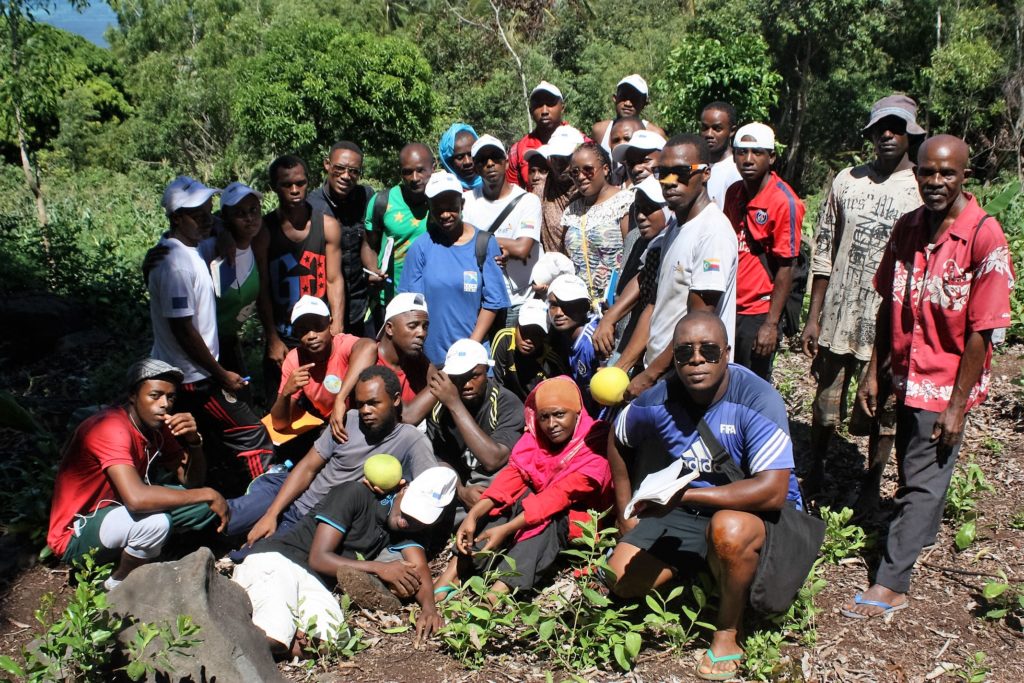
The programme was very popular with the students. We have selected some of their testimonials.
Erchad Chinoua, first-year student: «We have gained experience. In class, it’s very theoretical. This week we are in the fields, we have seen a lot of practical application which helps us to better understand what we had seen in class. Dahari is doing a good job on the ground. I can see that the farmers have realised that they can improve their crops and provide for their families. We hope that Dahari can expand to also support the farmers of Ngazidja.»
Aminata Ali Boina: «I was struck by the island of Anjouan, which is really mountainous. It's different from Grande Comore, there are a lot of rivers here. The farmers we met don't use chemical fertilisers, they are trying to grow organically and that's good, I appreciate their approach. I also saw that Anjouan farmers make a living, but not easily, they suffer a lot. In Outsa, we all noticed that life is very difficult. I congratulate the Anjouan farmers and wish them courage in their activities.»
Mmadi Saadi, President of the Pupils' Cooperative: «The welcome from the Anjouanais was magnificent. We would like to thank Dahari for their commitment and the French Embassy for financing the stay. For me, this study trip was a two-way exchange: we discovered new techniques, such as planting onion sets or building cattle enclosures. But we also shared our knowledge with the farmers. Thus, in Nindri, we showed them how to multiply sugarcane and a new technique for multiplying banana plants. I think everyone learned a lot during this stay.»