13 November 2022
Reforestation actions to rehabilitate degraded land in the village of Jimilimé in the Comoros
The village of Jimilimé, in the north of Anjouan Island (Ndzuani), was opened up in 2009 by a road linking…
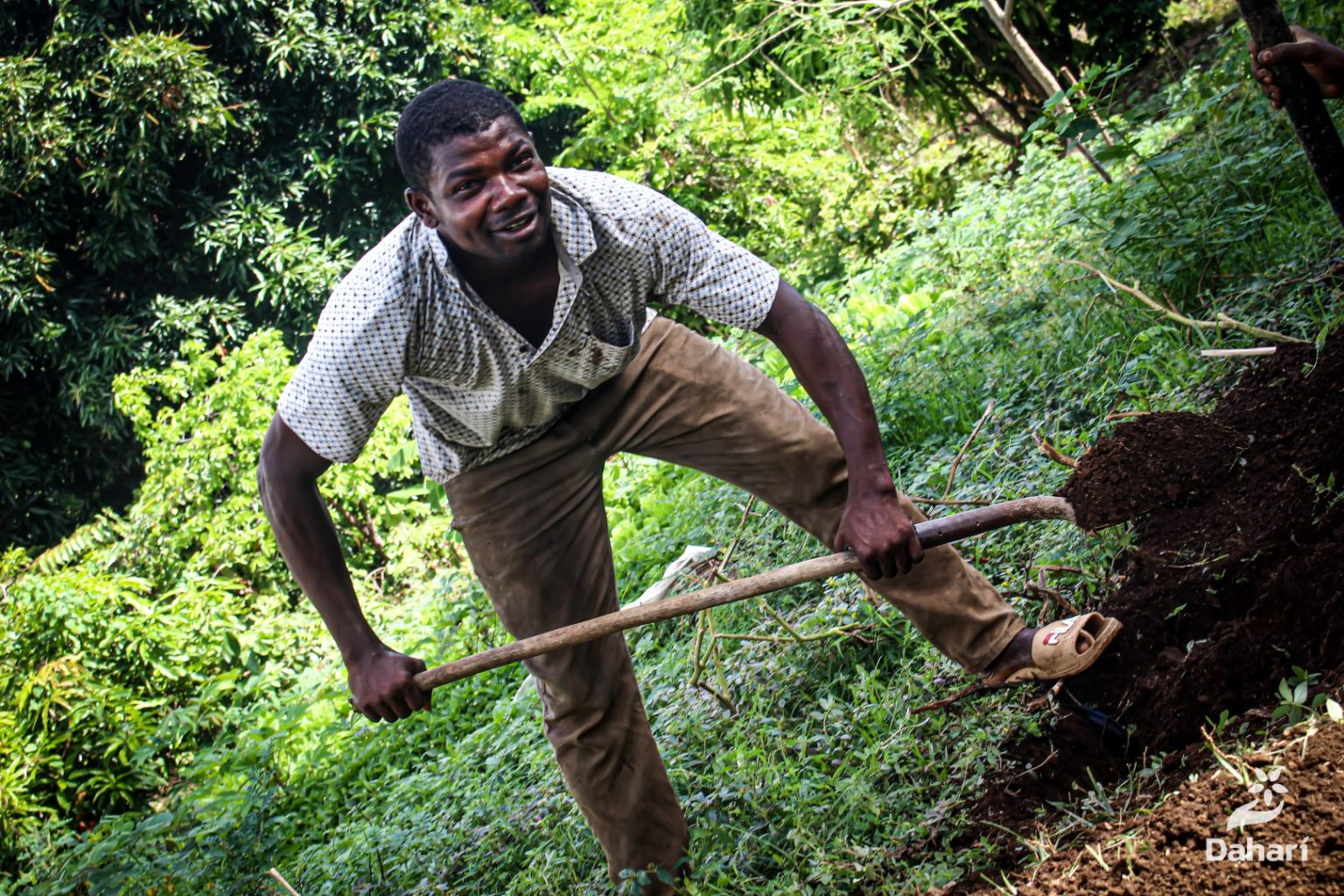
More than two years after Cyclone Kenneth passed over the Union of the Comoros, Dahari's agricultural reconstruction work, carried out thanks to funding from the’European Union, is bearing fruit in Anjouan and Grande Comore. Discover the mid-term results of the project «Development in the Union of Comoros of a productive and climate change-resilient agro-ecological model » which started in early 2020.
On the night of 24–25 April 2019, Cyclone Kenneth swept through the Comoros with devastating force, killing six people, injuring 200 and directly or indirectly affecting 185,000 people – more than 20% of the population. Whilst more than 4,800 homes were severely damaged or destroyed across the archipelago, the consequences were nonetheless catastrophic for agricultural land, which was largely devastated by the violent winds generated by the cyclone, the eye of which passed less than 50 kilometres north of Grande Comore. More than half of the plantations on Anjouan were affected to varying degrees, jeopardising the food security of many villagers.

Dahari did not hesitate to react quickly in the first few days following the disaster, offering aid to Comorian farmers and providing solutions to restart their production as soon as possible. It is thanks to funding from the European Union and the Department of Reunion that we were able to act immediately in favour of over 1,800 families in Anjouan whose crops were severely impacted. In close collaboration with the Comorian Red Crescent, short-cycle emergency seeds (such as Chinese cabbage, carrot, stifled beans, or even red bean) were distributed and accompanied by training, while the second phase involved restarting subsistence crops (bananas, cassava, and sweet potatoes).

Then Dahari established a medium-term agricultural reconstruction project financed by the European Union from early 2020. By the end of June 2021, 24 villages in Anjouan and Grande Comore, and over 3,200 producers had directly benefited from this programme, which operates around three pillars:
First and foremost, a Territorialised outreach approach has been put in place, relayed by the 191 groups that Dahari has been supporting for nearly two years. Technicians, mobilisers and community relays are grouped into trinomial teams to raise awareness among the populations about agroecological production methods, while adapting the learning content to specific local needs. Capacity building is organised in parallel for community relays on the themes of facilitation and social mobilisation, support for planning, and management of farmer field school monitoring activities. As local agents from the intervention area, they play a crucial role in mobilising and communicating with village producers.

Secondly, the Agroecological production strategy proposed by Dahari was implemented through three activities: preserving soil fertility through compost production and the dissemination of anti-erosion techniques, crop protection based on integrated pest management, and the dissemination of plants of sanitary and varietal quality through the promotion of macropropagation techniques, particularly the PIF multiplication technique for banana plants. This technique, which allows for an average of 30 seedlings to be obtained from the same stool, was applied to 105 nurseries which produced over 18,000 seedlings during the 2020-2021 campaign.

Finally, in order to encourage producer empowerment in seed supply, a Seedling production and redistribution strategy of banana, cassava, and sweet potato plants within the groups has been established. Initially, each group receives 10 banana seedlings per farmer, 150 cassava cuttings, and 60 sweet potato vines in total. The following year, beneficiaries who received seeds and cuttings commit to redistributing at least as many within their group to other members. During the 2020-2021 campaign, thanks to the involvement of group leaders and community liaisons, production from the groups allowed for the redistribution of more banana plants and 35,000 cassava and sweet potato cuttings. In parallel, a network of nurseries supported by Dahari ensures the regular supply of plants of varietal and sanitary quality.

Thanks to these three pillars developed by Dahari on two islands in the archipelago, farmers were able to combat the consequences of Cyclone Kenneth, quickly revive more efficient agriculture, and adopt techniques that will ensure better productivity in the future.