Here is the report's editorial, summarising the progress made during the year.
In February 2022, we published a new strategic plan with the mission of supporting rural communities to restore the ecosystems of the Comoros. It was a pivotal moment for our NGO: building on our experiences since our creation in 2013, we had sought to develop programmes with greater impact on natural resources and on the livelihoods of rural populations. This transition, however, required a significant overhaul of our activities.
Today, thanks to the patience of the farmers and fishers with whom we collaborate, the continued support of our technical partners, and the commitment of our donors — particularly through a transformative grant from Cartier for Nature — our new programmes are taking shape and producing their first impacts.
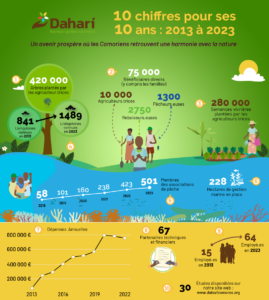
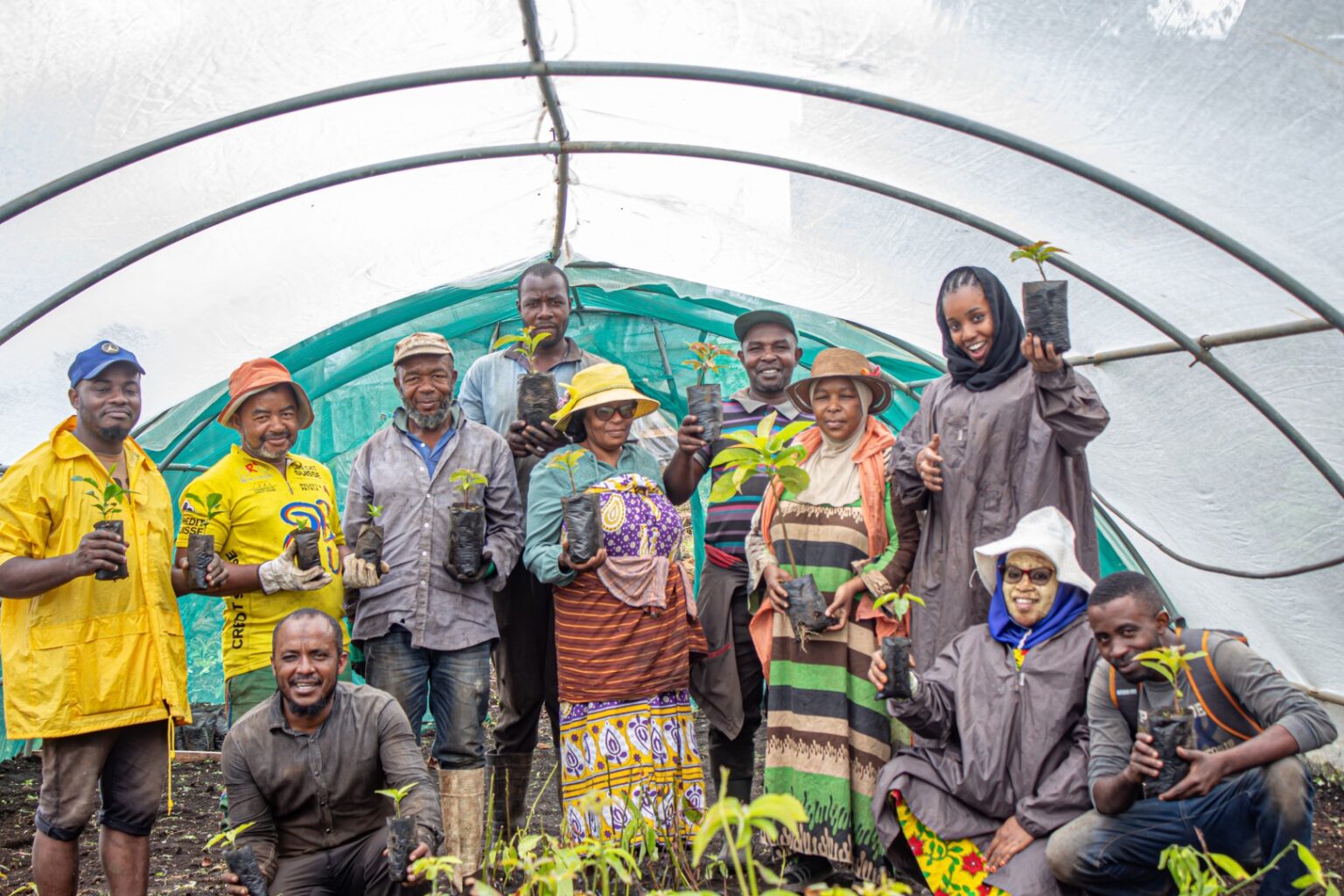
Our key figures updated at the end of 2025 (opposite) illustrate the scope of our actions on the islands of Anjouan and Grande Comore. The reforestation programme, the only one carried over from the previous strategy, totals 340,000 trees planted by farmers since 2017. A major advance in 2025 was its deployment at the La Grille site in the north of Grande Comore, which generated strong demand for trees in the area (page 25).
The other programme figures (40 forest conservation agreements and 4 permanent marine reserves) reflect actions under development since 2022. We are convinced that the significant efforts made in co-designing these programmes between our teams and the communities we support constitute solid foundations for their long-term sustainability, with an important extension of the Permanent marine reserves finalised at the end of 2025 (page 21). In 2026, we will seek to consolidate the impact of the forest conservation agreements on deforestation, before planning their deployment on a larger scale (page 11).
An important piece of news this year was the reclassification of the flagship species of the Comoros, the Livingstone’s fruit bat (Pteropus livingstonii). Livingstone's fruit bat. The International Union for Conservation of Nature (IUCN) officially downlisted the species from the “Critically Endangered” to the “Endangered” category, thanks to population data collected since 2013. We elaborate on the reasoning behind this decision on page 14.
This strategic overhaul takes time and effort, meaning that we have had to prioritise the work on our programmes. Thus, in 2026, we will advance reflection on the agroforestry programme in order to refine its targeting and strengthen its integration with our forest and marine programmes.
Read the full report in two versions: