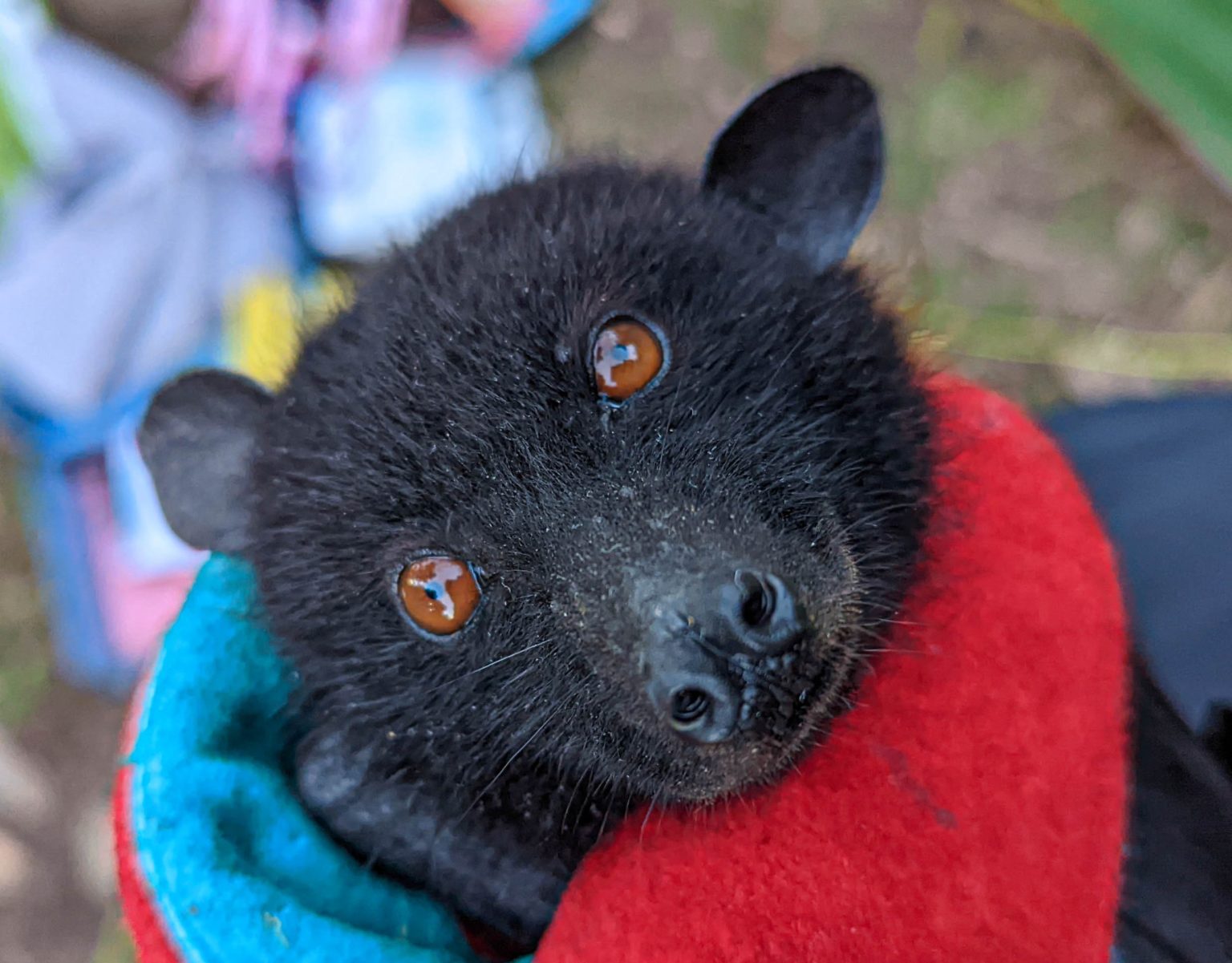
In May of this year, Livingstone's flying fox (Pteropus livingstonii) was officially downgraded from «Critically Endangered» to category "In danger" by The International Union for Conservation of Nature (IUCN).
This re-evaluation is based on population data collected by Dahari since 2013, in collaboration with the University of the Comoros and the National Parks, and with the support of Bat Conservation International.
"Livingstone’s fruit bat is an iconic species in the Comoros and a key focus of Dahari’s conservation efforts. It should be noted that this change in status does not stem directly from our conservation actions—though these remain essential for preventing a population decline. Rather, it is the discovery of new roosting sites, combined with regular, twice-yearly monitoring, that has allowed for a better understanding of the population’s size and stability," explains Misbahou Mohamed, Co-Director of Dahari.
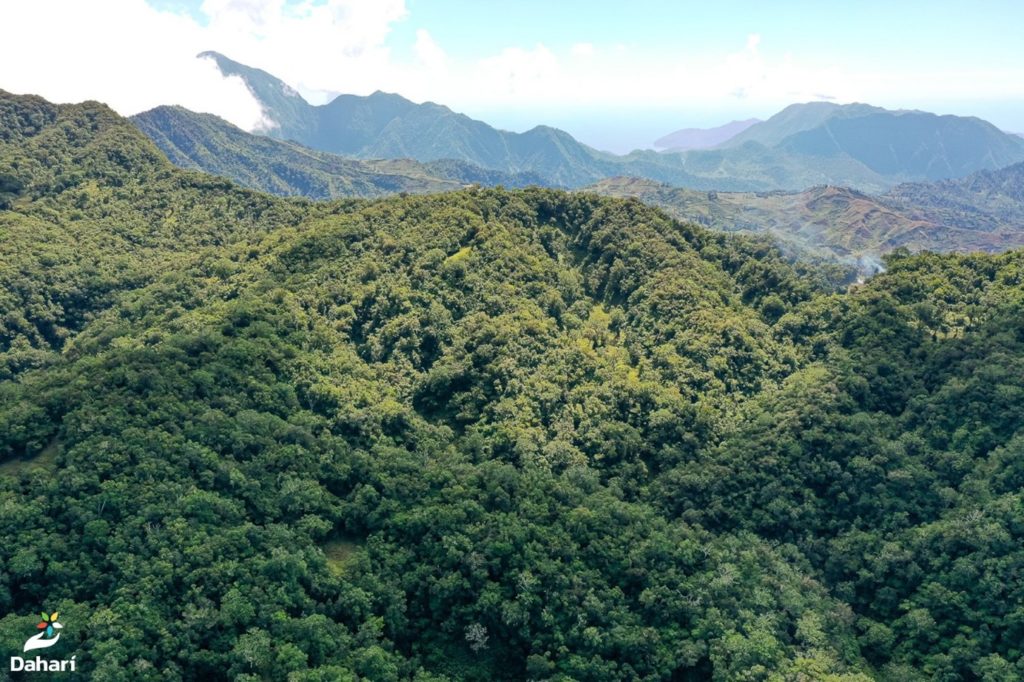
The species remains threatened by ongoing deforestation.
Despite this improved status, the species remains threatened: of the 62 Pteropus species listed on the IUCN Red List, Livingstone's flying fox remains among the most at risk of extinction, primarily due to the rapid disappearance of its forest habitat. Reliable deforestation statistics are lacking in the Comoros, but the best analyses available indicate an 80% loss of natural forests on the island of Anjouan between 1995 and 2014. Consequently, of the fifty permanent rivers that once existed on the island, only ten still flow continuously—the others have become intermittent or have dried up entirely.
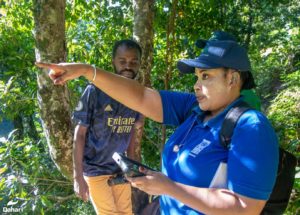
Until now, it was believed that this high level of deforestation led to a direct decline in the number of Livingstone’s fruit bats. However, regular counts conducted twice a year by Dahari—initially on Anjouan with the support of the University of the Comoros and Ntringui National Park, and later extended to Mohéli in collaboration with Mohéli National Park—show that the fruit bat population has remained stable since 2012.
Ongoing research reveals essential conservation needs
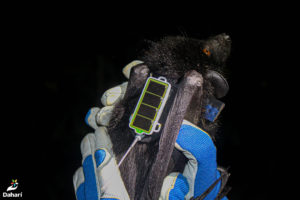
Since 2019, research using GPS tags allow us to better understand how fruit bats use the landscape and remaining forests. These studies have led to the discovery of new dormitories and key feeding areas. This information subsequently made it possible to obtain larger and more precise population estimates for Anjouan.
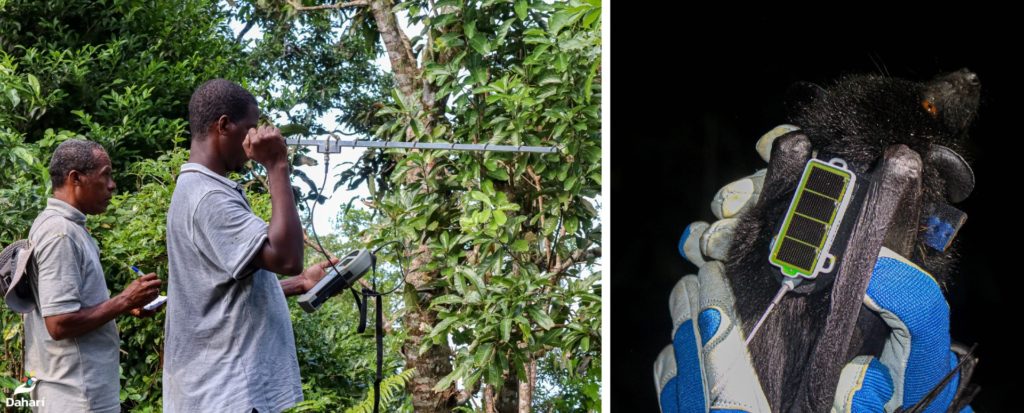
A better understanding of this threatened species’ use of territory and its population numbers has helped fill significant knowledge gaps and allowed for a reassessment of its status on the IUCN Red List—leading to its reclassification as "Endangered." However, the long-term survival of the species will depend on continued conservation efforts and the maintenance of close collaboration among all stakeholders at both the national and international levels.
Conservation agreements can secure the future of the species
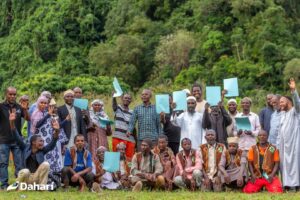
The conservation agreements ...implemented by Dahari offer hope for breaking the cycle of deforestation on Anjouan. Seven of the 26 known roosting sites (20 on Anjouan and 6 on Mohéli) are currently protected thanks to these agreements. Dahari provides benefits to farmers in the form of agricultural support or financial payments. In return, the farmers commit to protecting trees and restoring the forest on their land—in areas that are vital for fruit bats, biodiversity, and the regeneration of water resources.
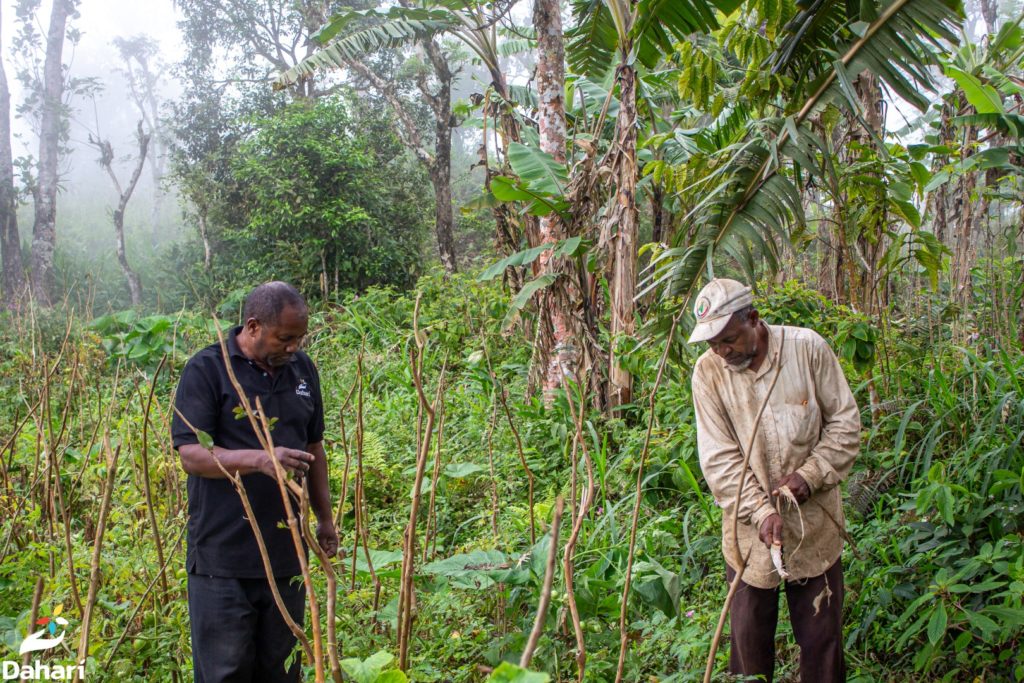
Batoidine Ousseni, who owns a lodging facility near the village of Adda, shares her account:
“The support I receive from Dahari is a great help with my farming activities. Each year, I am provided with seeds and technical training. My farming does not disturb the fruit bats, as I cultivate my crops far from their roosting site. Furthermore, I do not cut down trees, nor do I use fire. Living alongside the fruit bats also offers certain benefits, as trees grow naturally without me having to plant them.”
Dahari is currently evaluating the initial conservation agreements established around roosting sites and within high-altitude forests. Ultimately, Dahari aims to extend this approach to all of Anjouan’s forests—in collaboration with the National Parks—to incorporate key resting and feeding sites for the Livingstone’s fruit bat and ensure the survival of this still-threatened species.
Our work on the Livingstones is funded by Cartier pour Nature, Bat Conservation International, and Northumberland Zoo.