22 May 2025
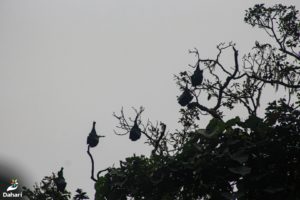
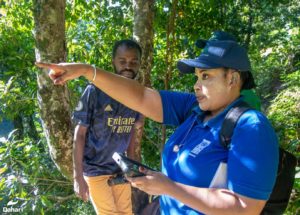
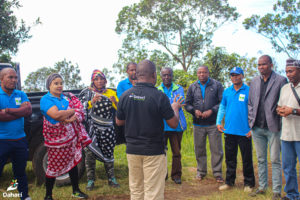
Local communities are actively involved in protecting the Livingstone's fruit bat in the Comoros
«I got closer to Dahari, because I had heard that there were these agents passing through my field. I...
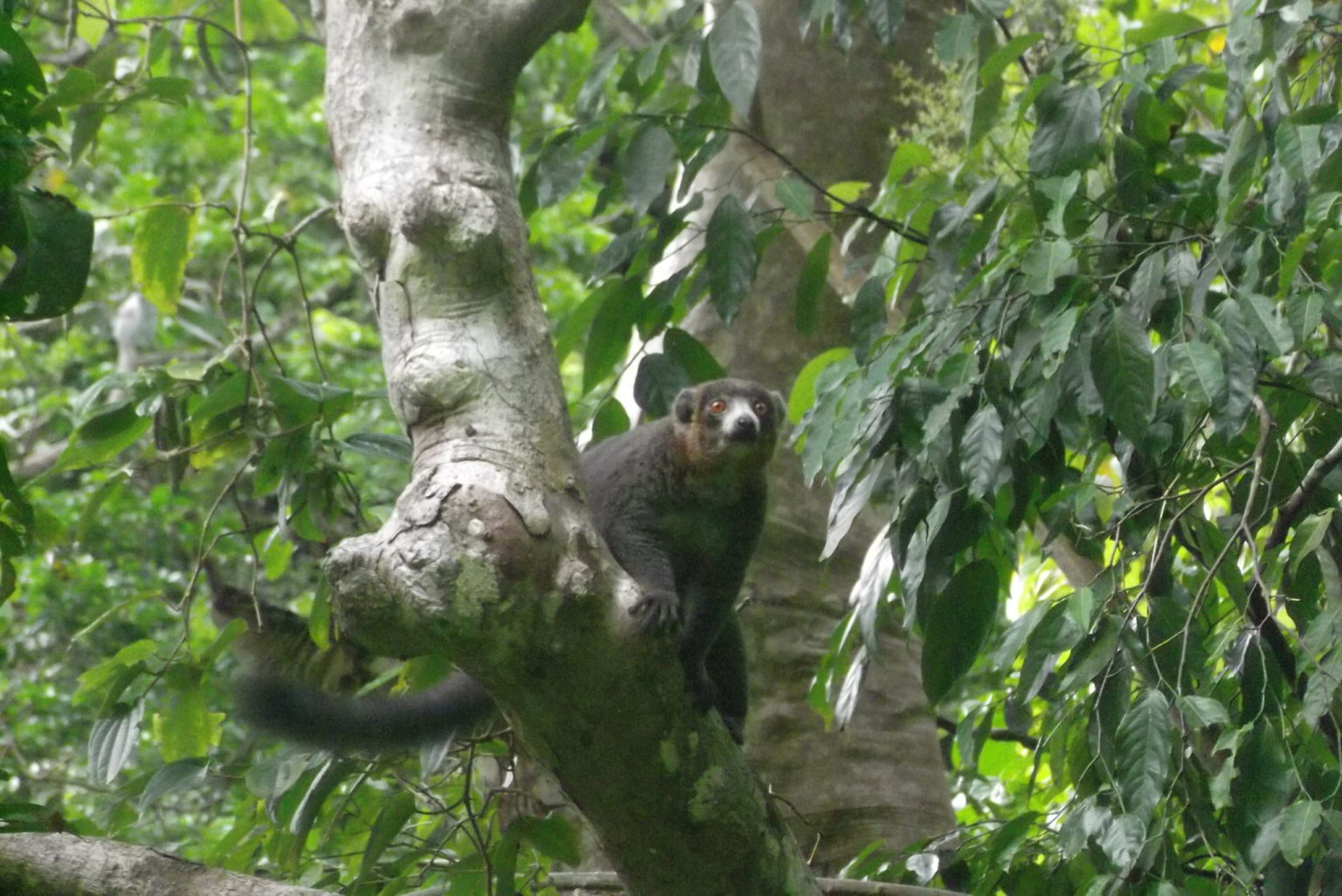
We often talk about «lemurs of Madagascar». But lemurs, also called makis, can also be seen on our Comoros Islands. Very little information is available on the makis present on Anjouan and Mohéli. Thus, Dahari has launched a research project on these animals in collaboration with Omaha's Henry Doorly Zoo and the Madagascar Biodiversity Partnership. An interview with the Dahari ecology team.
Indeed, There are two species living in the wild outside of Madagascar. The mongoose lemurmongoose lemur) is the species we are studying in Dahari. This species can be found on the islands of Anjouan and Mohéli in the Comoros archipelago. The other species is the red-fronted lemur (Brown lemurIt can be found on the island of Mayotte, which is also part of the archipelago. We do not know when or by whom the mongoose lemur was introduced to the Comoros from Madagascar, but it was well before the arrival of Europeans. What we do know is that the oldest known illustration of these lemurs in Anjouan dates from 1744 (Popo Bay in Churchill's A Collection of Voyages, London, 1744).
In partnership with the Madagascar Biodiversity Partnership, our team is currently studying lemur tissues and faeces., to measure the genetic distance between the population in Anjouan and Madagascar. The genetic component of the work will be carried out by the Conservation Genetics Department at Omaha’s Henry Doorly Zoo and Aquarium. Depending on the results of this study, the Anjouan population could be used as a source population to genetically enrich the Madagascar population.
On Anjouan, our role is to collect lemur faecal samples, and this is no easy task. Mongo lemurs usually live in forested areas with slopes exceeding 75%. They are therefore difficult to find and track. Given the scarcity of food on the island, the lemurs travel considerable distances to forage and they are often difficult to find. And even when we find the lemurs, we can't always collect the faeces – we can't follow them if they run away because of the steep slopes. As a last resort, we started luring them with fruit but we haven't had much more success. Sampling takes a lot of time and requires patience and perseverance. Over the last five months, we've managed to collect half of the necessary samples.
In March, we decided to organise a large lemur search. We mobilised 12 people from the Dahari team, split into small groups, and scoured the forest. Our goal was to collect at least five faecal samples. Unfortunately, we weren't lucky in our hunt: It rained the day before and the maki remained hidden in the heart of the forest.. All we managed to get out of it was scratches and bruises!

Mongo lemurs are one of the most endangered lemur species in Madagascar, but no study has yet estimated the population size of this species in the Comoros. It is therefore not known whether their numbers are declining or not. On Anjouan, lemurs can occasionally be spotted in the forest and, during the fruit season, in agricultural areas, villages and even towns. They are particularly fond of mangoes and jackfruit.
Mongo lemurs are also often domesticated in the Comoros. It is not yet known if their domestication is a threat to the species. On the other hand, what is certain is that lemurs are not hunted or consumed in Anjouan.
We therefore believe that the greatest threat to mongos is the destruction of their natural habitat. According to the United Nations, between 2000 and 2010, The rate of deforestation in the Comoros stands at 9.3% per year, which is the highest rate in the world. The main causes of deforestation are the expansion of agricultural areas and the felling of large trees for firewood.

Over the last seven years, Dahari's team has supported over 2,500 farmers, increasing their agricultural income through environmentally friendly techniques, in order to aid forest conservation. We are now working with three local communities to establish the first protected forest areas before the end of 2015.
In the future, we will to conduct research To estimate the population size of mongo lemurs on Anjouan. We will also seek to identify the species' distribution and the type of habitat it prefers. This information is necessary if we are to develop an effective conservation programme for this species.