Fifty years ago, the island of Anjouan had around fifty rivers. Today, only ten permanent rivers remain. This disappearance has in part been caused by the loss of around 80% of Anjouan’s natural forest, which also impacts soil fertility due to erosion.
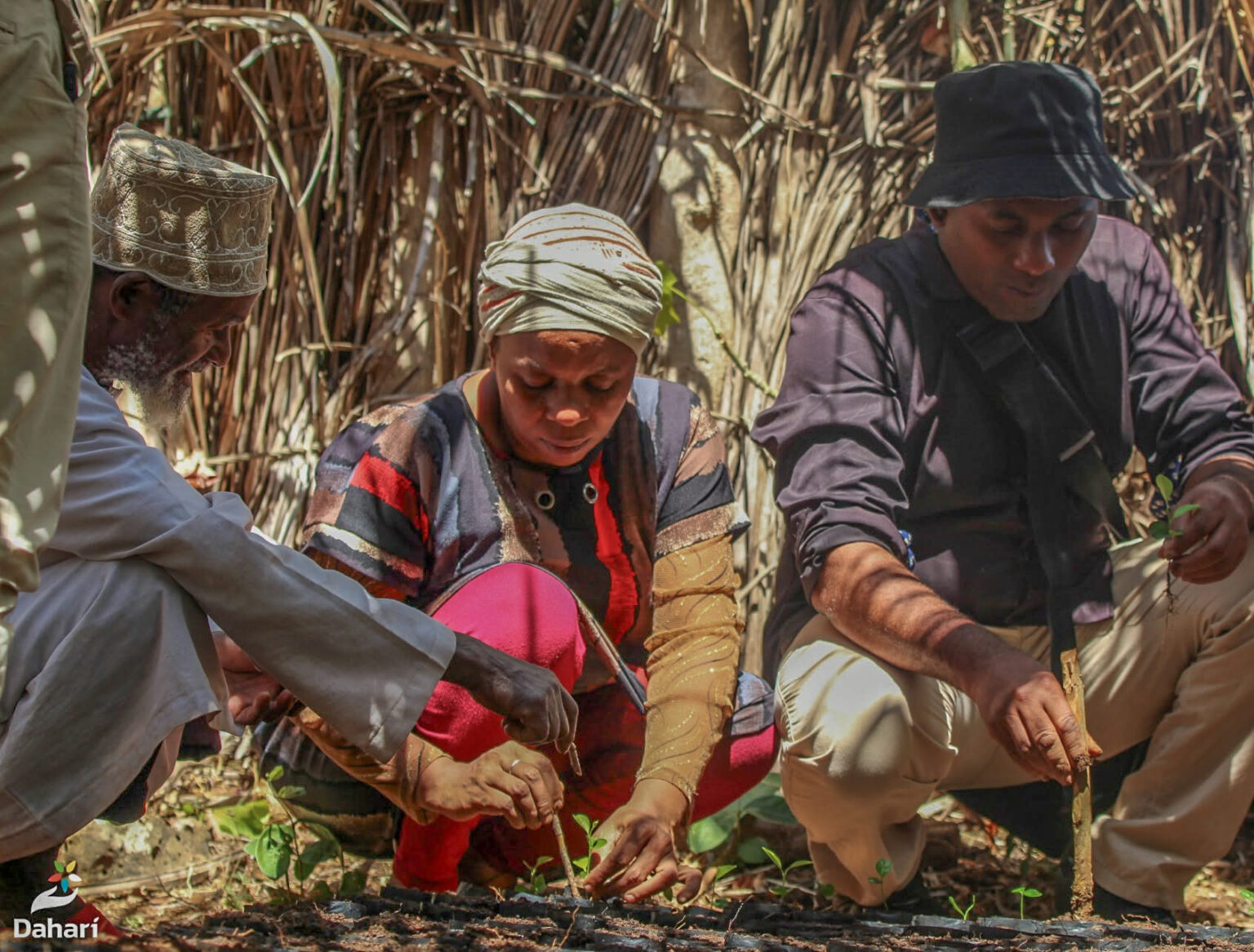
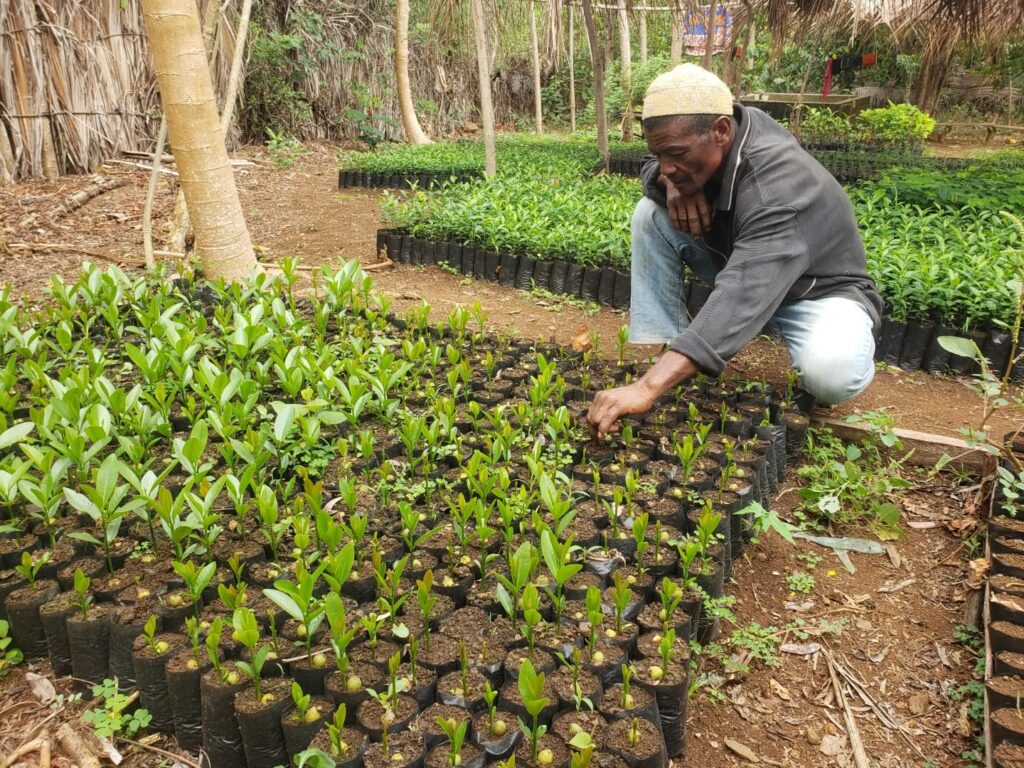
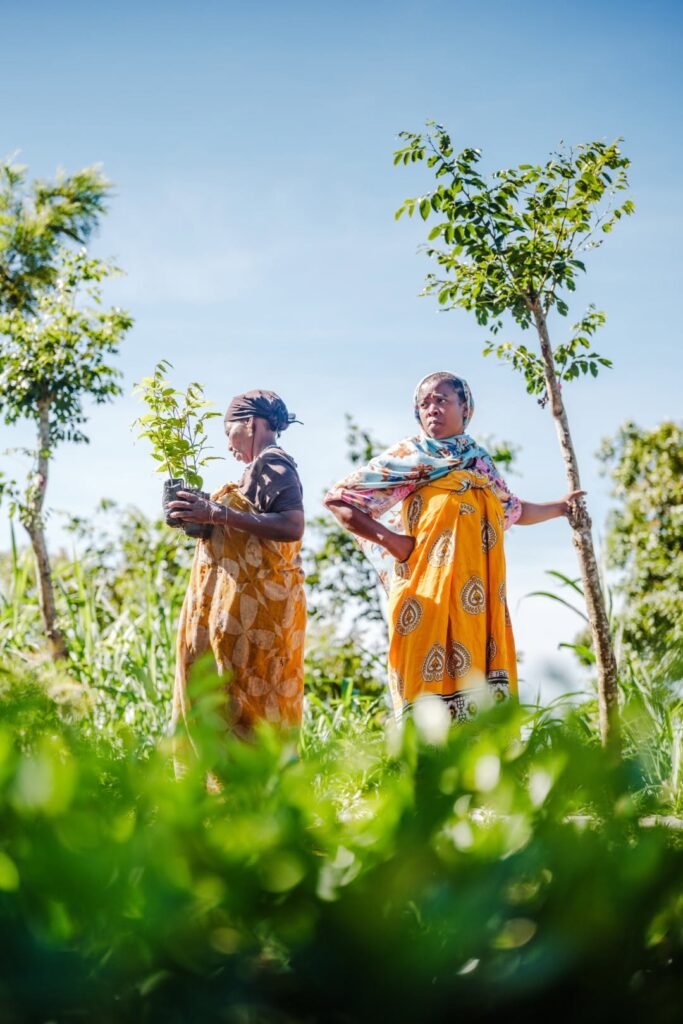
Dahari employs a participatory approach to these reforestation campaigns. Farmers themselves choose the tree species to plant in their fields, ensuring greater ownership and better care of the trees. Following tree-selection workshops held in the villages, nursery operators step in to produce the saplings. From seed collection and nursery setup to seedling maintenance and disease treatment, nursery operators play a vital role in the success of the reforestation campaigns.
30 agriculteurs(trices) formé(es) sur le métier de pépiniéristes
Work began in 2015 with the establishment of water management committees, which carried out initial tree-growing activities in three nurseries set up in the villages of Outsa, Ouzini, and Adda. Comprising farmers and plot owners, these committees were tasked with producing trees to reforest the micro-watersheds that supply their water resources.
This community-based approach has made it possible to directly involve local populations in land restoration efforts and to build local capacity in tree production. Over the years, several other nurseries have been established in the villages of Ngandzalé, Jimilimé, and Lingoni.
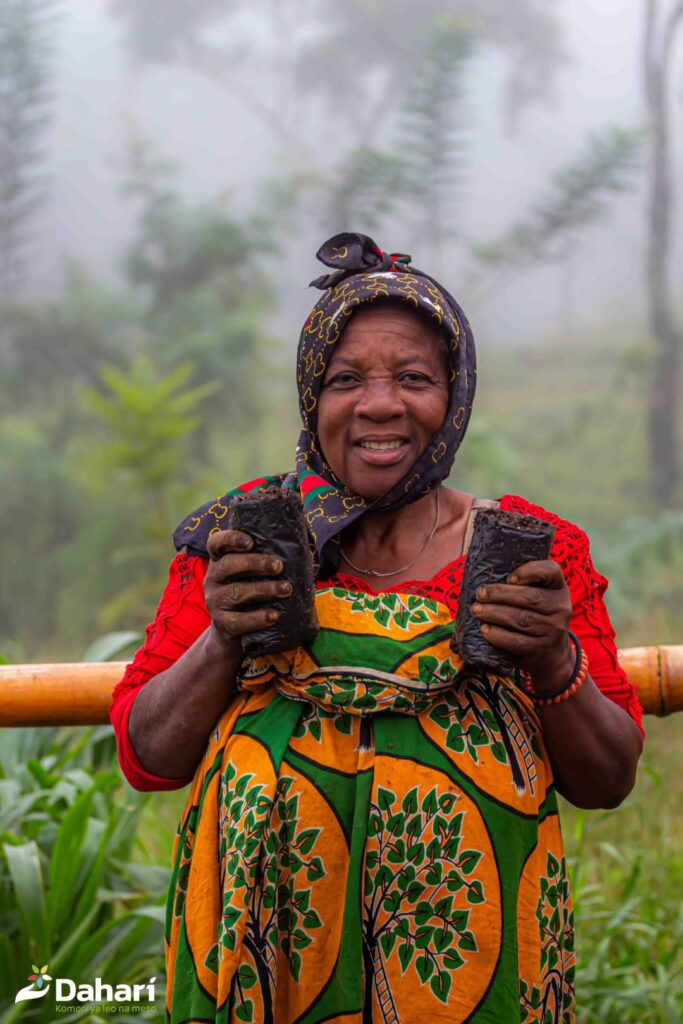
Here is the account of Mr. Maoulida Houmadi, a farmer from Adda and one of the first nurserymen trained for the work: "Since Dahari began its activities, I have benefited from their training on plot layout techniques and also received seeds. Subsequently, I became involved in reforestation work to raise tree seedlings. This has provided me with an additional source of income. Dahari’s technicians help us source seeds for the trees to be planted; we then prepare the site to set up the pots and care for the trees. For maintenance, we use a natural product that Dahari taught us how to make."
Exchange visits to reinforce learning
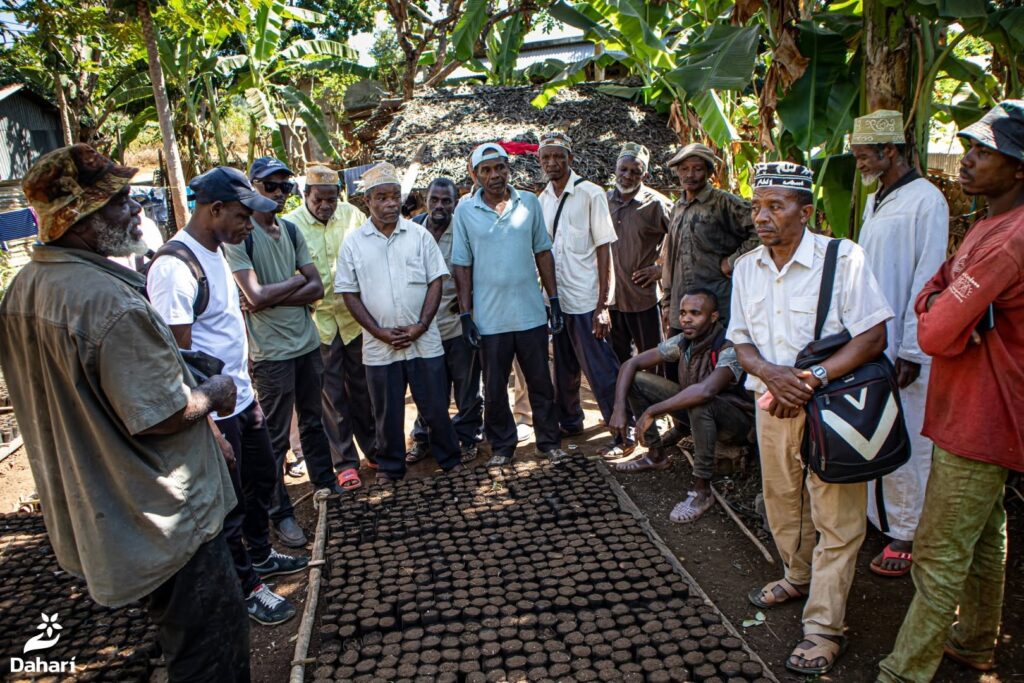
Exchanges between nursery operators play an important role in collective learning. Exchange visits are regularly organized to share best practices regarding nursery layout and seedling care. During a visit to Jimilimé, Mohamed Ahamadi, a nursery operator from the village of Lingoni, shared the following with us:
"At Lingoni, we often encounter difficulties with plant growth. We thought the problem lay in how we were filling the pots. And we were right; here in Jimilimé, nursery workers advise us to ensure the pots are perfectly upright once filled. This technique allows the roots to grow without obstruction. Conversely, if the pot isn't straight, the roots struggle to develop, and the plant dies."
These opportunities for exchange enable nursery growers to gradually improve their techniques and better handle the challenges encountered in the field.
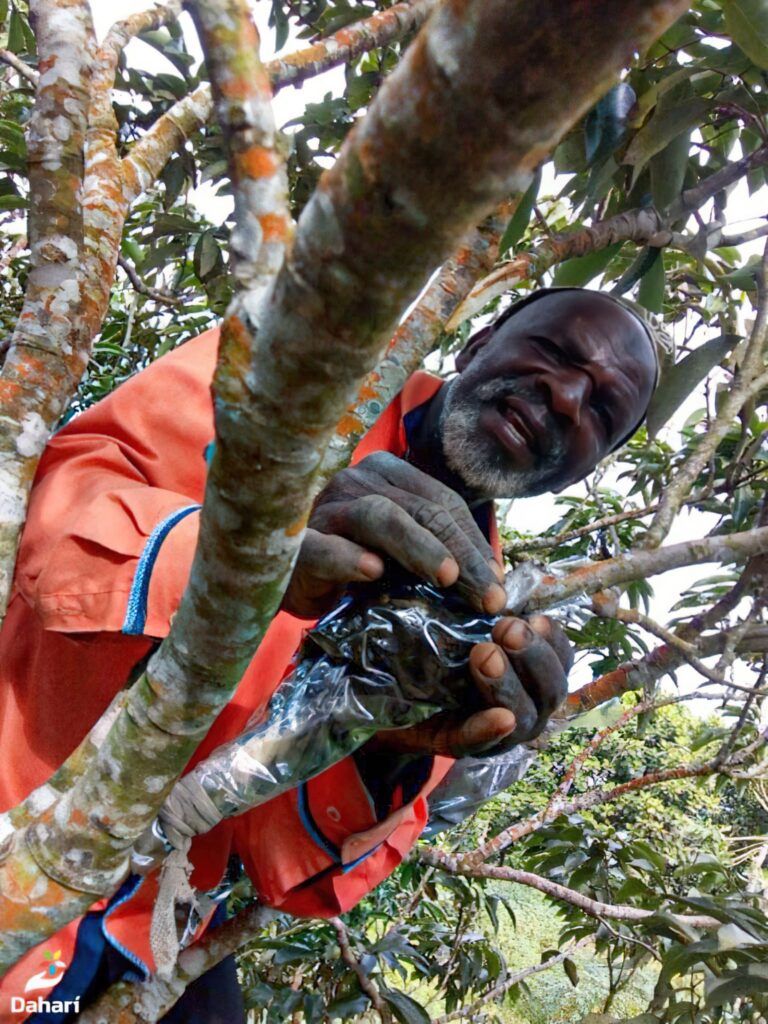
The nursery operators also underwent training on the rapid propagation of fruit trees using techniques such as grafting and layering, applied to mango, citrus, lychee, and breadfruit trees. This approach enables faster seedling production and improves the quality of trees intended for reforestation and agroforestry.
Annual reviews conducted to improve each campaign
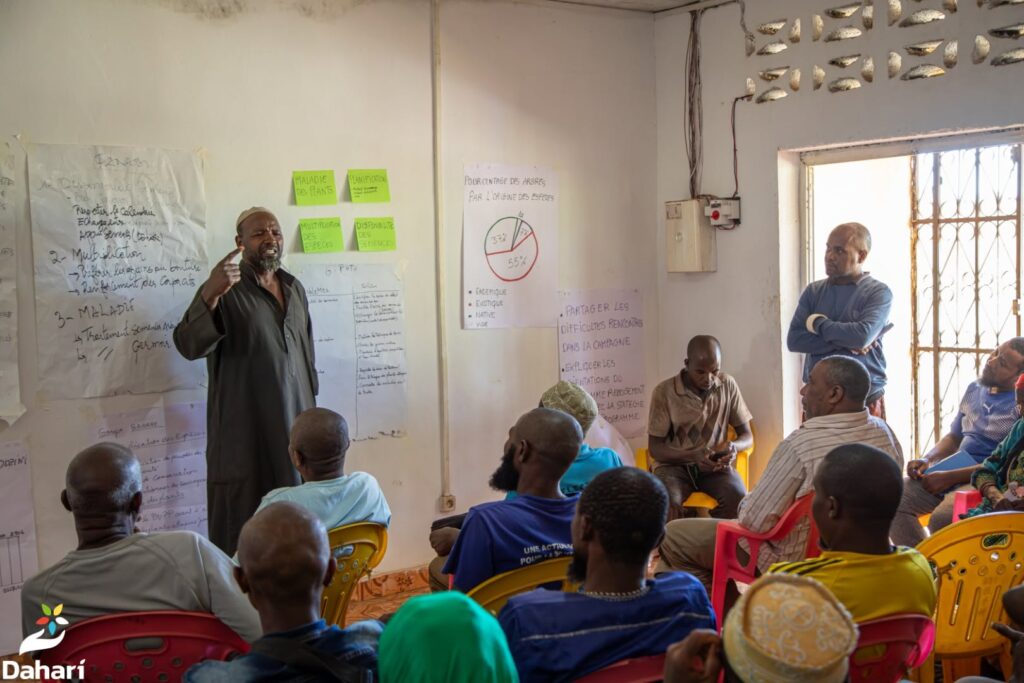
Following the launch of each campaign, we take the time to review tree production results with all the nursery growers. This gathering offers a unique opportunity for them to evaluate campaign outcomes, identify challenges encountered, and improve practices for future seasons.
Of the 50,000 plants produced and distributed in 2025–2026, 7% are endemic species, 37% are native species, and 55% are fast-growing and fruit-bearing species. Nursery operators highlighted difficulties associated with producing endemic species, stemming from the unavailability of seeds and a lack of experience in propagating certain species.
Anchki Massoundi, from the village of Ngandzalé, tells us about the situation: "The difficulty in finding seeds from endemic trees indicates that these trees are becoming scarce; yet, logging continues because they are highly valuable. Moreover, even when the seeds are found, propagation is a complex process."
Based on this key finding, nursery operators have placed special emphasis on producing endemic species for the 2027–2028 reforestation campaign, refining their propagation and seed conservation methods to ensure timely availability.
In reforestation campaigns, we achieve a 70% survival rate one year after planting, and the high quality of the seedlings produced by nursery growers is key to this success.