16 June 2025
Anjouan's fishermen and fisherwomen are strengthening their cooperation to preserve marine resources
À Anjouan, comme dans l’ensemble des Comores, le manque d’institutions solides rend crucial la mise en place de systèmes de…

Sharing the results of fisheries monitoring data offers a unique opportunity for fishers to reflect on the sustainability of fisheries management, and for the broader community to learn about and understand the impact that fishing and its management have on the marine ecosystem. As part of a collaborative effort, Dahari has implemented a participatory approach to sharing these data within communities, with the goal of actively involving local stakeholders in the sustainable management of marine resources.
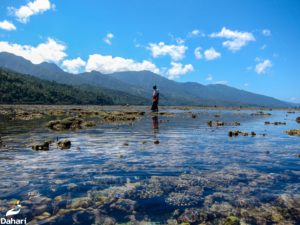
In southwestern Anjouan, fishers from communities supported by Dahari have expressed concerns regarding the decline of resources over the years. To reverse this trend, Dahari is assisting local communities in developing strategies to preserve their marine resources. As part of this effort, a participatory fisheries monitoring program has been established—stretching from Vassy to Maweni-Kangani—to track trends in catches and the health of marine resources.

During monitoring, information is collected on the weight, size, and species of fish caught, revealing the abundance and diversity of the resources. This monitoring also makes it possible to record the fishing techniques employed and the time spent at sea—data that are useful for assessing the sustainability and productivity of the fishery.
Since 2017, more than 150 fishers—from Vassy to Maweni-Kangani—have been trained in collecting data on their fishing catches.
The results of these monitoring efforts are shared with the communities several times a year to spark discussions on the state of resources and to collaboratively develop management measures aimed at preserving marine resources.
Mariama Djaanfar, a member of the association Maecha Bora—which brings together women fishers from the villages of Dzindri, Vassy, and Salamani—shares her perspective on the subject: “My motivation was to understand what I didn’t understand. It was through the presentations that I grasped the concept of overfishing. If we fish too much, there’s a risk that there won’t be any resources left to catch in the future.”

However, since 2017, the presentation of findings had been conducted solely by Dahari staff, using charts and figures that could be difficult for some to grasp. As of 2021, Dahari began involving the communities themselves in presenting this information as simply as possible. When fishers are able to present the data to their own communities, it fosters a direct and authentic exchange. This not only builds trust and transparency within fishing communities but also encourages open discussions regarding the challenges and opportunities related to fishing.
In 2022, 28 fishers from our marine intervention areas received training in interactive data analysis, enabling them to effectively conduct feedback sessions.

During the training sessions, participants took part in fishing simulations in which they imagined catching octopuses—represented by pieces of candy—over the course of 12 rounds, corresponding to the 12 months of a year. Afterward, they placed their daily catches on a sheet of paper to observe the variations. Charts and numerical data emerged naturally as the "fishers" added more candy after each round of fishing.
Following the training, Ansoiya Mohamed—president of the association Malezi Mema, which brings together fishers from Vassy, Dzindri, and Salamani—had the opportunity to hold a data-sharing session in her village. “When Dahari handled the feedback sessions, I didn’t fully grasp things, but since we learned how to conduct the presentations ourselves, I understand much better than before. The first time I presented the results to my village, the people were very attentive and at ease. We need to keep up the momentum and organize more presentations.”, Ansoiya tells us.
This response underscores the importance of involving fishers in the presentation of data—not just in the monitoring process—to boost their confidence and empower them in the management of resources. Training sessions for interested fishers are ongoing, and the next steps will involve presenting their findings to other stakeholders, including the authorities, to highlight their community-led marine management initiatives.