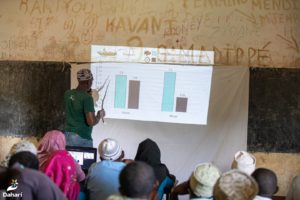
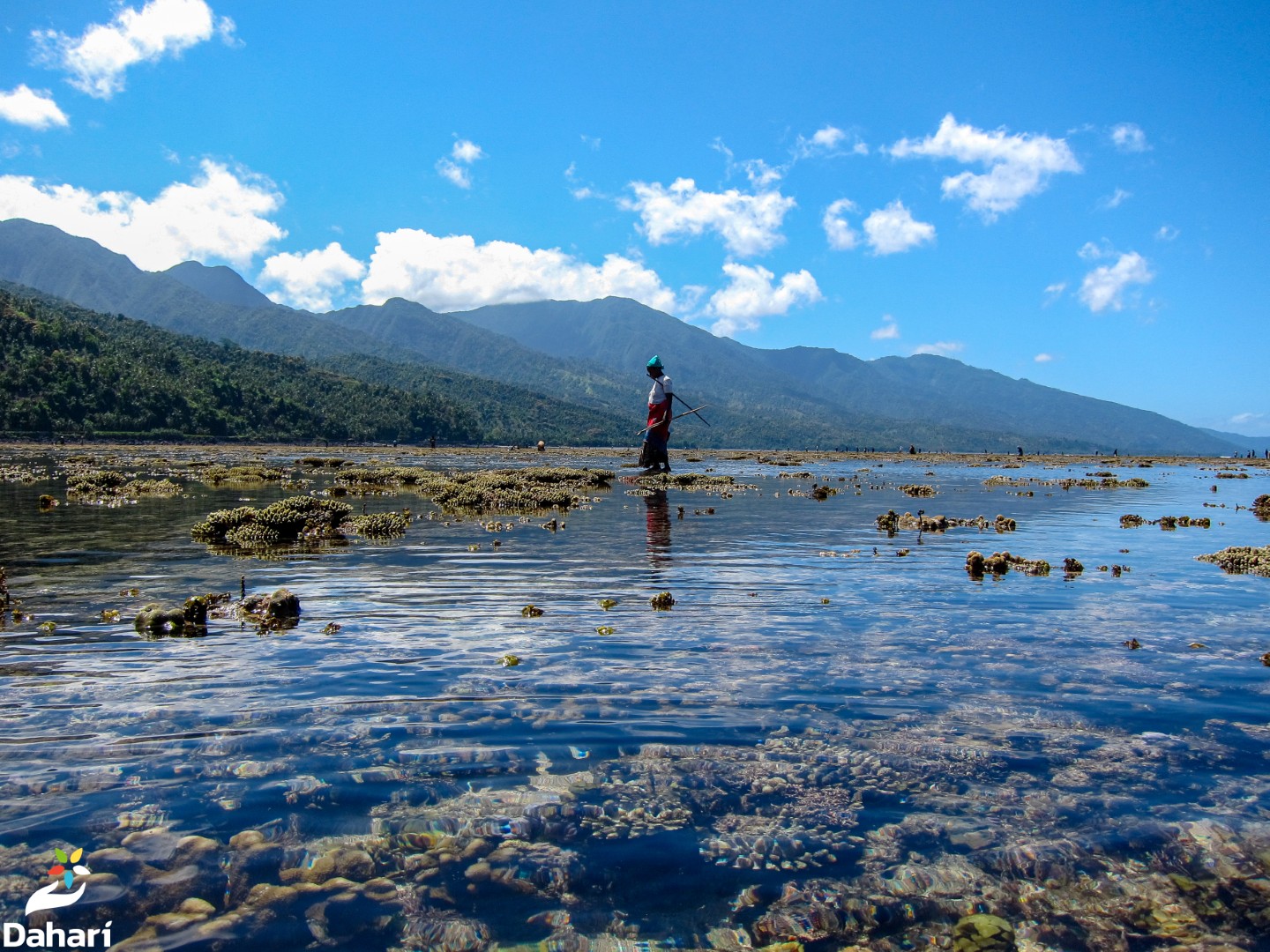
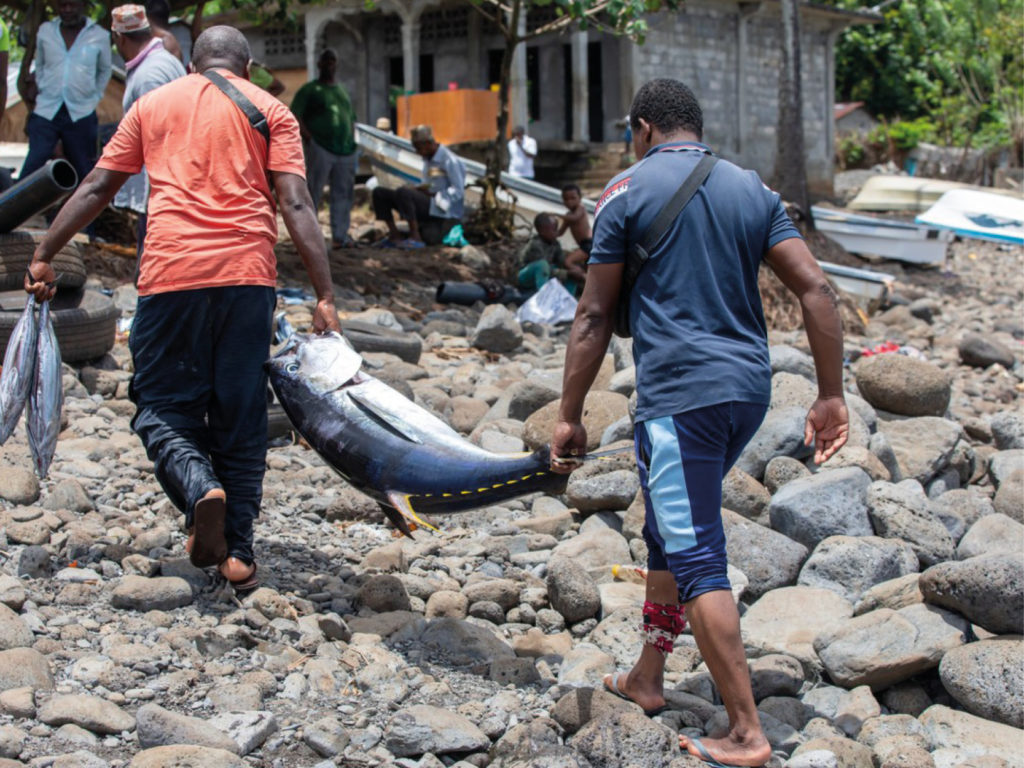
Aux Comores, où la mer représente plus de 70 % des protéines consommées en zones rurales, la pêche artisanale est un pilier de la sécurité alimentaire et du bien-être des familles. Pourtant, la pression de pêche, les techniques destructives et les effets du changement climatique fragilisent les récifs coralliens et réduisent les captures. Face à ces défis, les pêcheurs et pêcheuses d’Anjouan se mobilisent pour mettre en place des réserves permanentes, offrant aux écosystèmes le temps de se régénérer durablement.
Pour garantir l’adhésion des communautés, Dahari a intégré des incitations économiques permettant de compenser les impacts négatifs des réserves à court terme, tout en renforçant la filière pêche à long terme. Ces appuis – congélateurs solaires, techniques de transformation du poisson, Dispositifs de Concentration de Poissons (DCP), accompagnement agricole – font aujourd’hui partie de l’approche holistique de Dahari pour protéger les récifs sans fragiliser les familles qui en dépendent.
1- Congélateurs solaires : moins de pertes, plus de stabilité
Les pertes post-capture constituent un enjeu majeur aux Comores. Entre 11 % et 21 % des produits de la pêche se détériorent faute de moyens de conservation adaptés et d’accès stable à l’électricité (étude de 2022). Pour y répondre, Dahari a installé un premier congélateur solaire à Vassy en 2023. L’équipement permet de conserver les poissons plus longtemps, de produire de la glace et de générer des revenus pour l’association locale. En deux ans, le congélateur a généré plus de 1000 euros de bénéfices, réinvestis en partie dans des projets de développement communautaire et la maintenance de la réserve permanente.
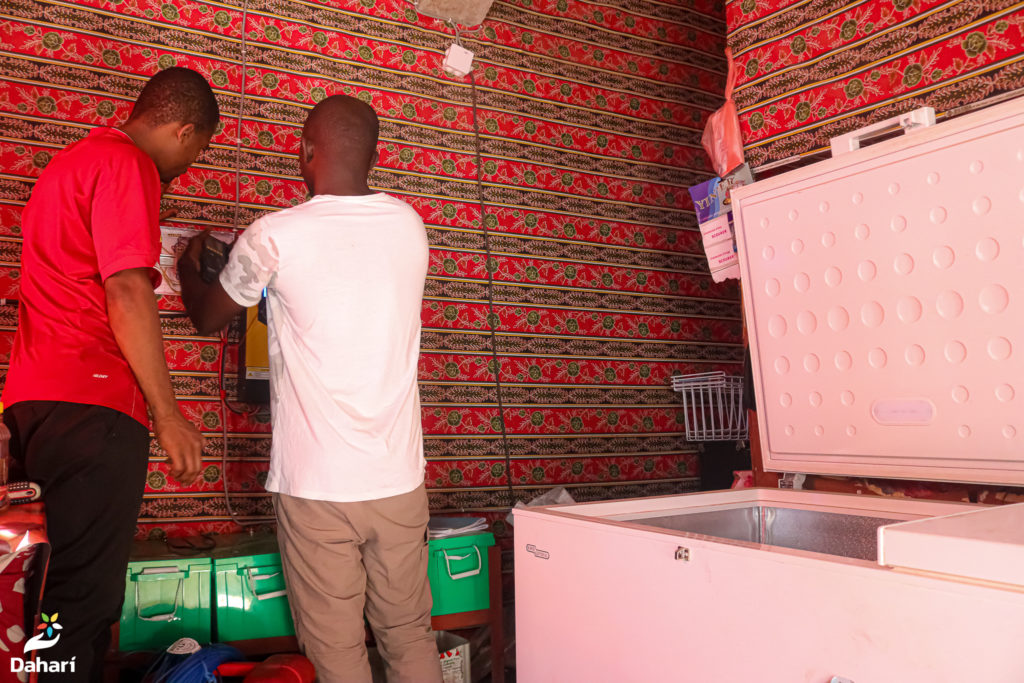
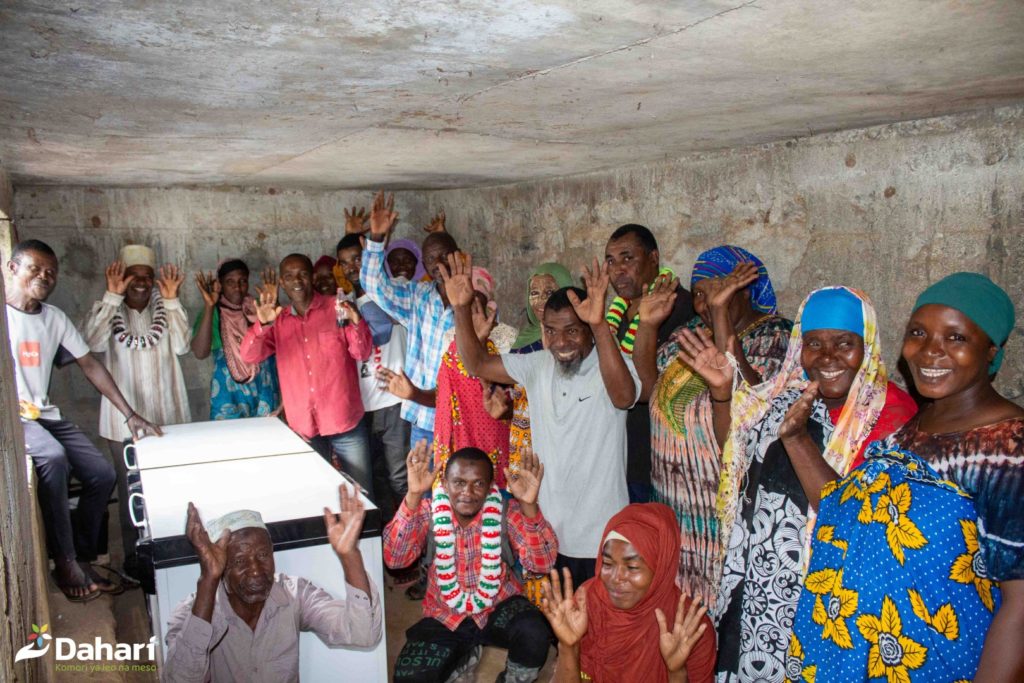
Un second congélateur solaire a été remis en 2025 à la communauté isolée de Maweni ya Nkangani. Là aussi, l’impact a été immédiat : moins de pertes, meilleure qualité des produits et un appui concret pour accompagner les discussions en cours sur la création d’une future réserve permanente.
« Depuis qu’il nous a été offert, ce congélateur est devenu l’un des équipements les plus utiles dans le village. Comparé à d’autres aides reçues, je trouve que celui-ci a une valeur particulière, car il permet de conserver nos aliments comme les feuilles de manioc ou le poisson, et ils se congèlent très bien. Je considère que ce congélateur apporte un bénéfice réel et important à notre communauté. » Souligne Mme Chaambati Ousseni, présidente de l’association Ouvoimoja wa Dahari de Maweni ya Nkangani.
2- Séchage et fumage : valoriser les produits
Pour limiter le gaspillage et diversifier les revenus, Dahari forme les associations de pêcheuses Maecha Bora et Fikira Ndjema aux techniques de séchage et de fumage du poisson, et séchage de poulpe. Le poulpe séché est particulièrement apprécié et parfois même demandé depuis les îles voisines, offrant aux femmes l’opportunité de générer un revenu supplémentaire tout en valorisant les produits de leur pêche.
Les formations s’accompagnent d’un suivi technique et de l’amélioration des équipements, renforçant la qualité des produits proposés, ainsi que l’organisation de foires locales pour valoriser les produits. En 2025, l’association Maecha Bora a généré environ 500 euros de bénéfices nets, dont une partie revient directement aux femmes qui font le séchage, le reste servant à alimenter la caisse de l’association.
Bien que la concurrence des produits importés – notamment de Madagascar – limite les marges, les femmes soulignent que cette activité constitue une source régulière de petits revenus, tout en améliorant la sécurité alimentaire des ménages.
3- Les DCP : soutenir la pêche au large et réduire la pression sur les récifs
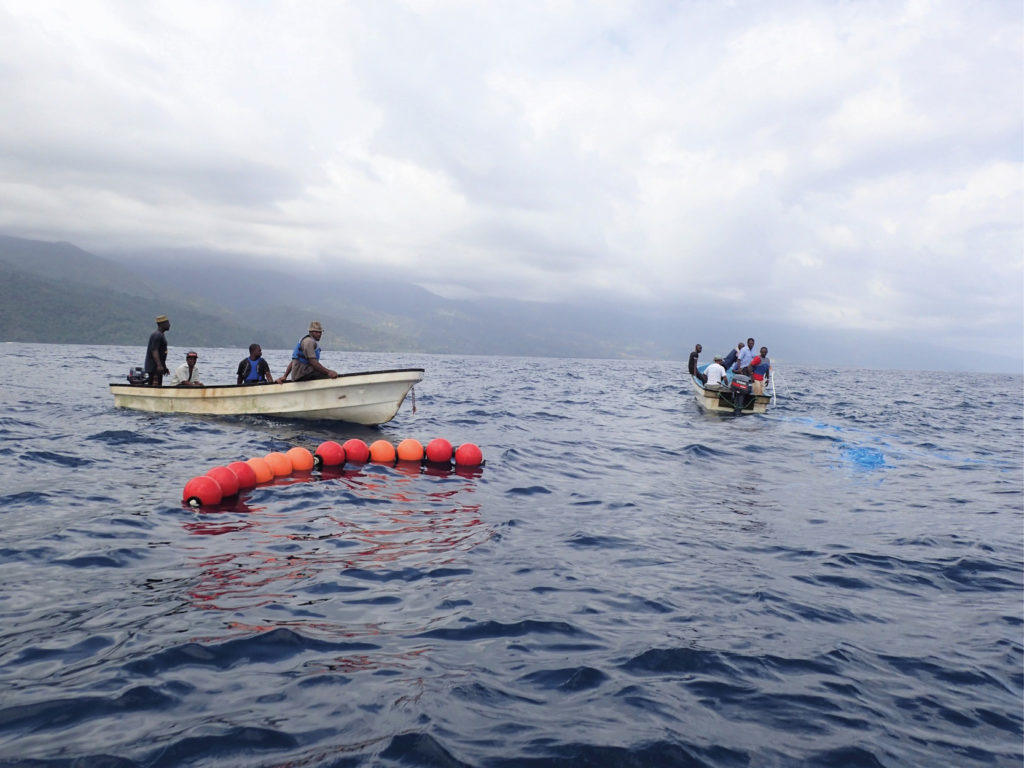
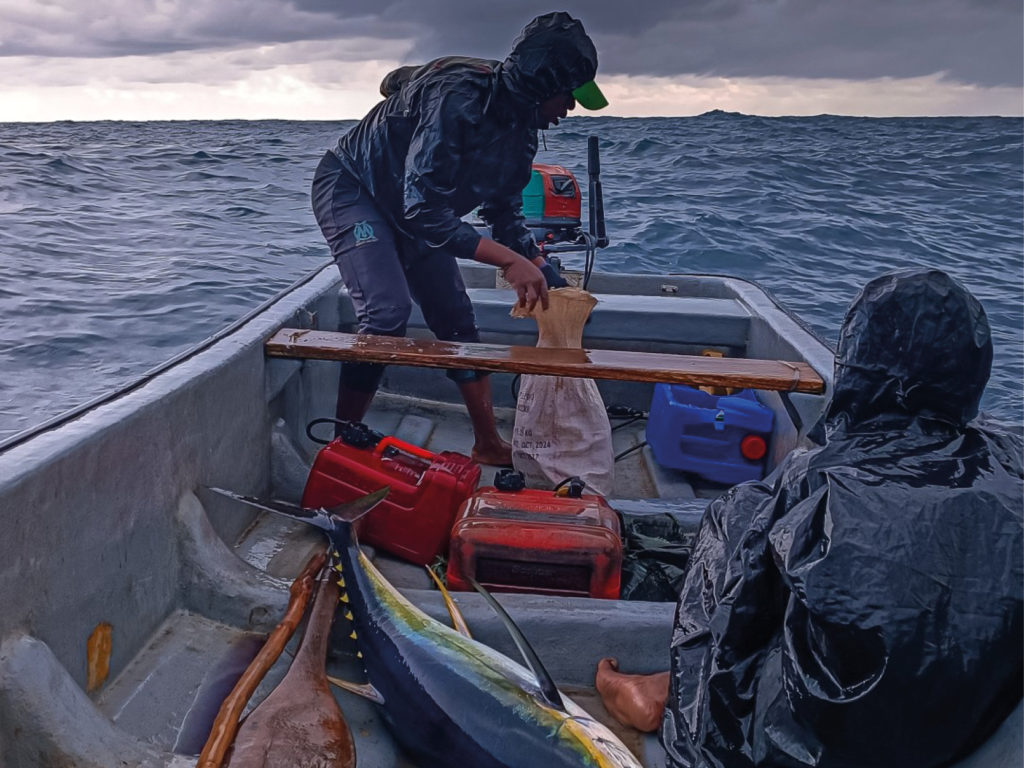
Lors de la création de la première réserve permanente de Vassy en 2021, Dahari a installé un Dispositif de Concentration de Poissons afin d’améliorer les captures au large. Ce dispositif flottant crée un habitat artificiel qui attire les poissons pélagiques, et ainsi augmente les captures, permettant aux pêcheurs d’augmenter leurs captures tout en réduisant la pression sur les récifs côtiers et les longs déplacements en mer.
Un nouveau DCP, adapté aux besoins des pêcheurs en pirogue, est prévu pour accompagner l’extension récente de la réserve, et un autre a déjà été installé à Kowe, où la communauté discute de la création de sa propre réserve.
Amir Soufi, membre de l’association de pêche Twama Ya Ulozi de Kowe, nous en parle davantage : « C’est un petit foyer qu’on a fait pour les poissons, grands et petits qui viennent s’amuser ici. Il y a de la nourriture sur ce DCP. Maintenant beaucoup de poissons passent sur cette zone et nous pêcheurs arrivons à pêcher tranquillement. Nous nous retrouvons souvent ici, les pêcheurs à pirogue et à vedette. On peut être cinq, six pêcheurs et en fin de journée chacun arrive à repartir avec au moins 10kilos de poissons ».
4- L’agriculture comme filet de sécurité économique
À Anjouan, la plupart des pêcheurs et pêcheuses sont également agriculteurs. Dahari les accompagne dans leurs cultures vivrières et maraîchères grâce à des pratiques agroécologiques adaptées aux réalités locales. Cette diversification permet de maintenir un revenu complémentaire, particulièrement durant les périodes de faible pêche, et contribue à réduire la dépendance exclusive à la mer.
Cet appui agricole est réservé aux pêcheurs engagés dans la gestion des ressources marines, ce qui renforce leur implication dans la gouvernance communautaire.
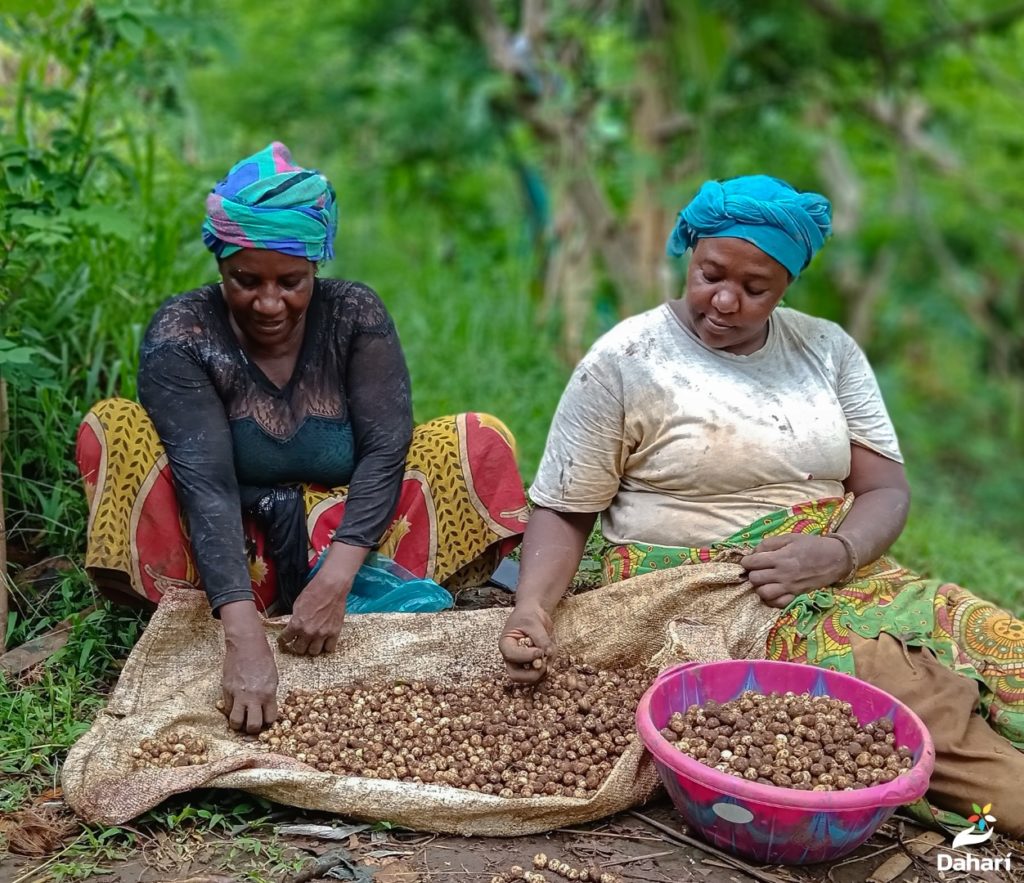
« Cette année ce que j’ai pris à cœur c’est le manioc que j’ai planté, la pastèque et le pestai. Ça m’a fait très plaisir de voir les rendements cette année. Je mange, je gagne des revenus et des gens viennent me demander ici et j’arrive à leur donner, pour qu’ils aient du courage pour venir me rejoindre dans le travail ». Hidaya Hakim, membre de l’association Maecha Bora de Dzindri.
In brief
Les incitations économiques mises en place par Dahari ne sont pas de simples compensations. Elles renforcent la filière pêche, améliorent la sécurité économique des ménages et soutiennent l’engagement des pêcheurs et pêcheuses dans la mise en place des réserves permanentes, un outil central pour restaurer les récifs coralliens des Comores.
Aujourd’hui, dix communautés du sud-ouest d’Anjouan travaillent à consolider ou créer leurs propres réserves permanentes. D’autres villages s’inspirent des résultats observés à Vassy, où les pêcheurs voient revenir certaines espèces et augmenter les captures autour du récif protégé. En travaillant main dans la main avec les communautés et ses partenaires, Dahari contribue à bâtir un modèle durable, reproductible et adapté aux réalités locales.