18 August 2026
Agro-ecological solutions for sustainable farming in the Comoros
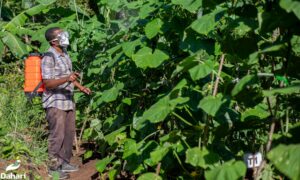
Since 2022, we have therefore been working with a network of 19 farmers in Anjouan and Grande Comore to test solutions based on locally available resources...

As Dahari seeks a new coordinator for its agricultural program at the start of 2021, we present a joint interview with Sven and Brunilda—two former holders of the position who have maintained a special connection with Dahari. Here are some excerpts from the conversation.
What was your background before joining Dahari?
Sven – After completing my training as an agricultural engineer specializing in tropical agriculture in Belgium, I worked for an agricultural cooperative in Cameroon and in the field of cartography in Mali. By the time I joined Dahari, I had three years of experience and a solid background in territorial development and the establishment of farmer field schools.
Brunilda – I earned my degree as an agricultural engineer through a Master’s program in Rural Development at the IRC in Montpellier. Subsequently, I held various positions—including agricultural advisor, project officer, and project coordinator—working for government agencies and NGOs in South America, mainland France, and Mayotte.


Which aspects of the position did you enjoy the most?
S. – I greatly appreciated the variety and balance across different responsibilities: strategy, technical work, team management, and administration. The work environment is highly dynamic; the management and leadership teams empower you and grant you autonomy. Combine that with a significant amount of fieldwork, and you get an excellent experience. The agricultural development program appealed to me for several reasons: its integrated approach across various sectors, its landscape-level perspective, and its focus on sustainable agriculture and smallholder farmers. Dahari is also an organization with a highly motivated team, demonstrating a level of commitment I have never encountered elsewhere. I also loved the fieldwork and the magnificent landscapes of Anjouan!
B. – Successfully managing agricultural activities in support of a natural resource management project required a high level of commitment and the strengthening of a wide range of skills—including human resources management, the adaptation of agricultural techniques, logistics, and the development of synergies with other sectors within the NGO—all while navigating the unexpected challenges that arose on a daily basis! The innovative nature of these projects also left me with some wonderful memories. For instance, we implemented a food-crop propagation program using in-vitro plants and introduced the PIF (plant propagation from stem fragments) technique.


How has your experience at Dahari served you, both personally and professionally?
S. – I left Dahari because I had to return to Belgium for personal reasons, but I would gladly have stayed for a few more years! My position allowed me to grow as a department manager and learn how to lead a team. This experience, spanning nearly three years and characterized by a high degree of autonomy, helped me build self-confidence and ultimately secure a role at the headquarters of one of Belgium’s largest NGOs, as coordinator of their programs in West Africa.
B. – Professionally, this assignment served as a stepping stone toward high-responsibility roles within large-scale international organizations. I was able to secure a position as a national coordinator at a major NGO, thanks in part to all the skills I had developed. in this regard at Dahari. I was also able to strengthen my connections within the network of non-profit organizations in the Indian Ocean! On a personal level, there is no doubt that this experience helped me develop my ability to adapt to a different culture and environment.


What attachment do you keep? avec Dahari et pourquoi ?
S. – After leaving Dahari in 2014, I continued to follow and support them. I initially carried out uI took part in a follow-up mission to assess developments within the agricultural department in 2016, and later participated in an agricultural strategy workshop in 2019. Since the end of 2019, I have also been supporting Dahari in improving their monitoring and evaluation system. Thanks to this initiative, a large portion of their data will soon be collected via what are known as MDCs—Mobile Data Collection systems—using tablets and smartphones. Once again, this highlights the innovative nature of Dahari, which continues to prove its worth. I remain committed to Dahari, partly because the team is pleasant and the organization has a strong desire to keep evolving.
B. – Since leaving Dahari, I have stayed informed through the organization’s Facebook page and website, and by maintaining contact with several team members. I have also carried out a number of consultancy assignments, and I was very pleasantly surprised to see the progress the NGO has made over the past four years. Dahari has grown, matured, and strengthened significantly, becoming an organization recognized in the Union of the Comoros for its professionalism and commitment. The association and I share a similar vision regarding our approach to development—one that is bottom-up, participatory, and responsive to the needs of the farmers we support—as well as our commitment to ethics (transparency and clarity), strategies for preserving natural resources (our holistic, multidisciplinary, and territorial approach ensures long-term sustainability!), innovation (which, alongside a willingness to constantly re-evaluate, serves as a key tool in developing our activities), and human resources management (the continuous strengthening of local team members' skills).


Can you summarize your experience at Dahari for us in three words?
S. – Committed, inspiring, and deeply connected to the field.
B. – Enriching, coherent, exciting.