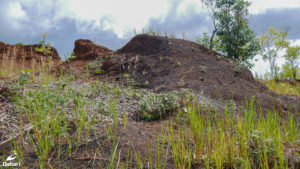
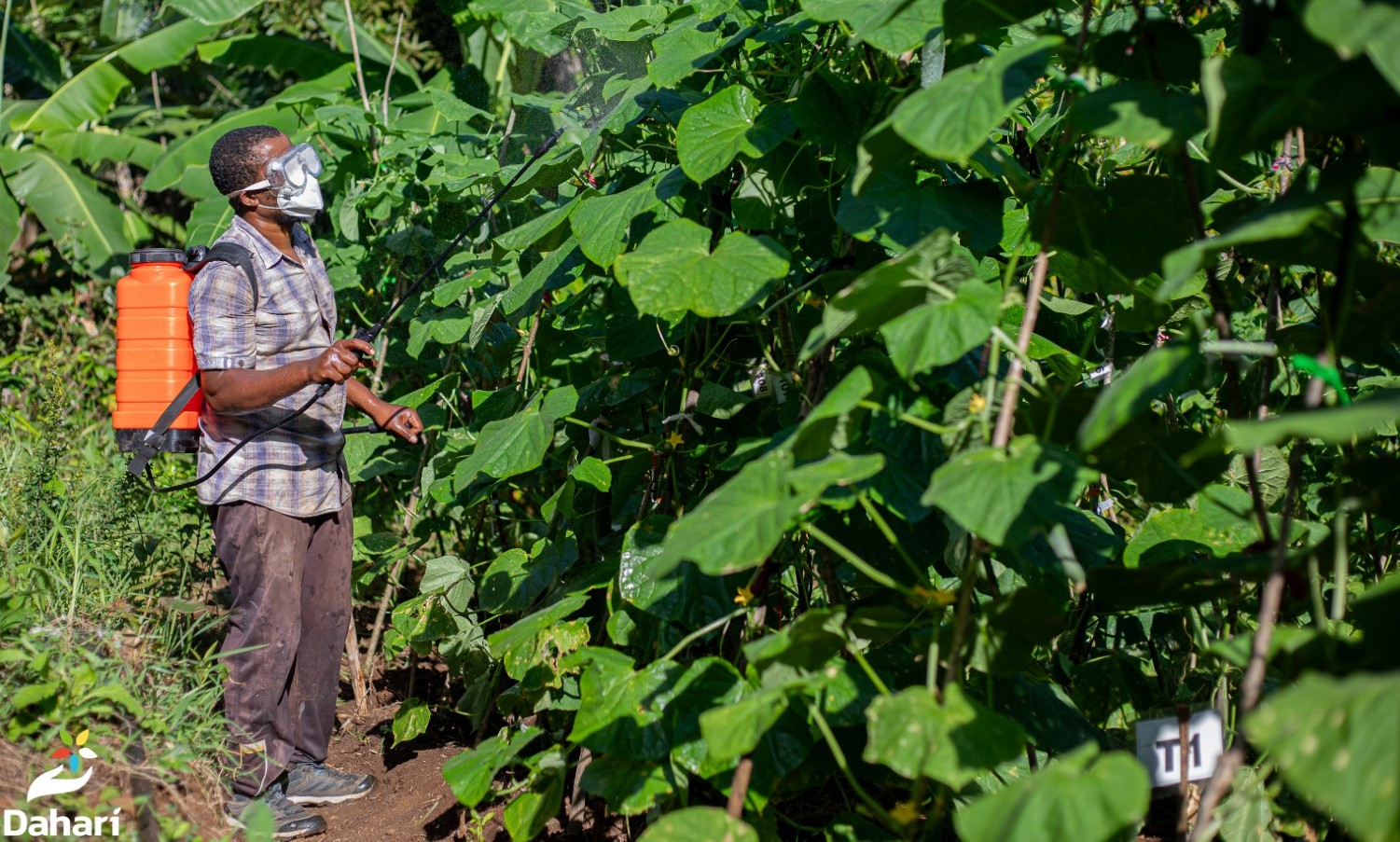
Since the 1980s, agricultural intensification in the Comoros has increasingly relied on the use of chemical fertilisers and pesticides. These practices contribute to the degradation of soils and biodiversity and pose risks to human health.
In response to these challenges, our Agroforestry Programme aims to support a productive agroecological transition by encouraging farmers to adopt agroforestry practices and reduce their reliance on chemical pesticides.
Since 2022, we have therefore been working with a network of 19 farmers in Anjouan and Grande Comore to test solutions based on locally available resources. Among the practices being developed are the use of compost enriched with naturally occurring microorganisms and the testing of plant-based biopesticides made from local ingredients.
Mature compost in just 30 days
Compost is an important source of organic matter for improving soil quality and fertility. However, its preparation can be time-consuming: conventional compost can take two to three months to reach maturity.
Using naturally occurring microorganisms, we have worked with seven farmers to test an accelerated composting method, enabling farmers to produce mature compost more quickly.
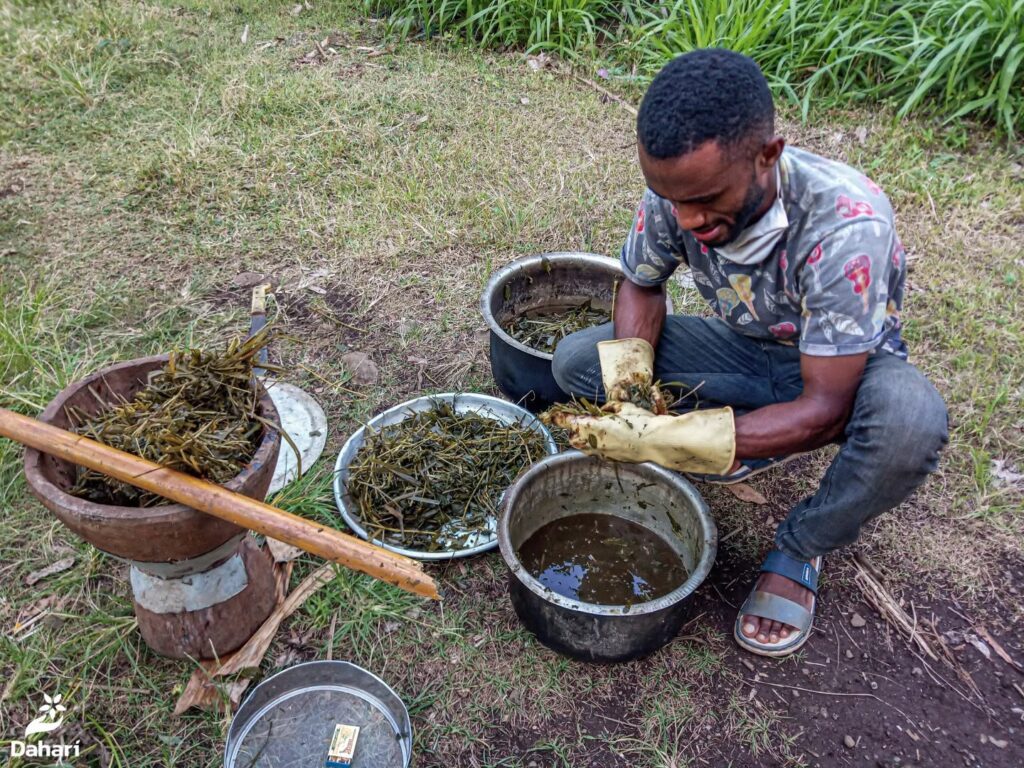
These microorganisms are prepared using several ingredients, including flour, legumes (beans, chickpeas or lentils), raw sugar, fresh or dried cow manure, neem leaves and cow urine.
The results are encouraging : the compost reaches maturity in just 30 days. This significant reduction in maturation time allows farmers to better manage the period between two planting cycles and have compost ready for use in their fields more quickly.
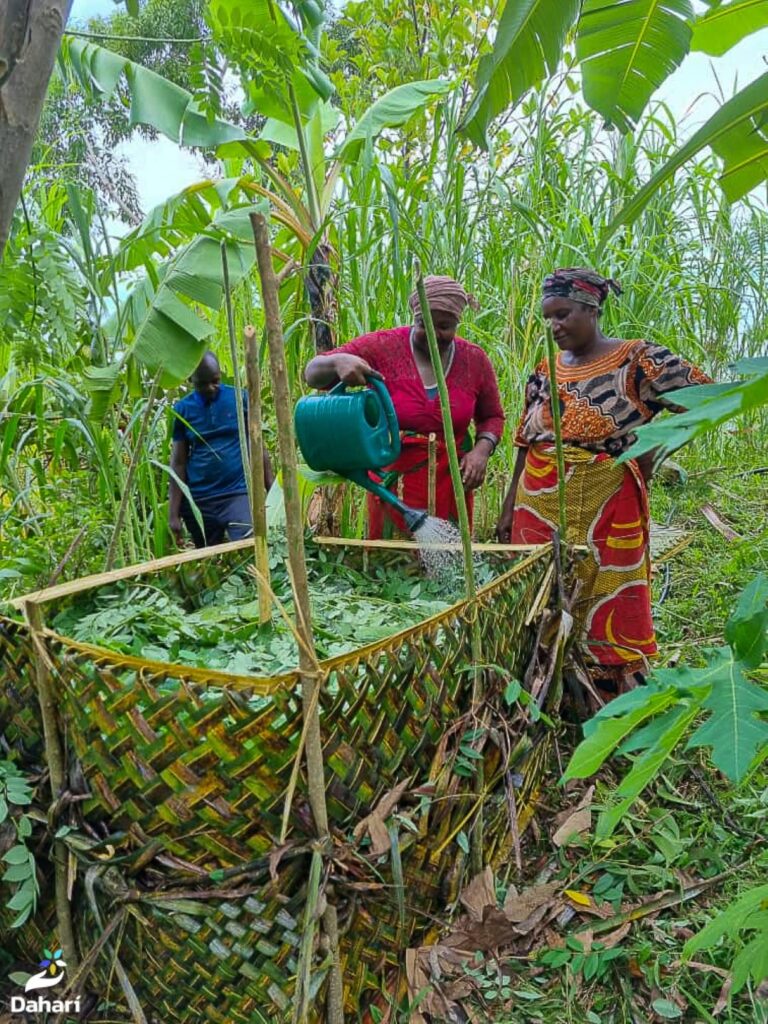
Nourdati Chami, a farmer from Ngandzalé, explains: I had previously been trained to prepare compost, but it took a lot of time. We would dig a hole and fill it with a mixture of soil, leaves and cow or chicken manure. We would then leave it to decompose until the mixture was ready. One day, a Dahari technician came to tell me that we were going to prepare compost, and I immediately refused because I knew it took too much time. He then explained that we were going to use a new method that would be much faster. Instead of digging a hole, we made a compost pile above ground. About every ten days, we turned the mixture and added a product. I was surprised and happy to have compost ready to use after only one month
A 100% natural formula to protect crops
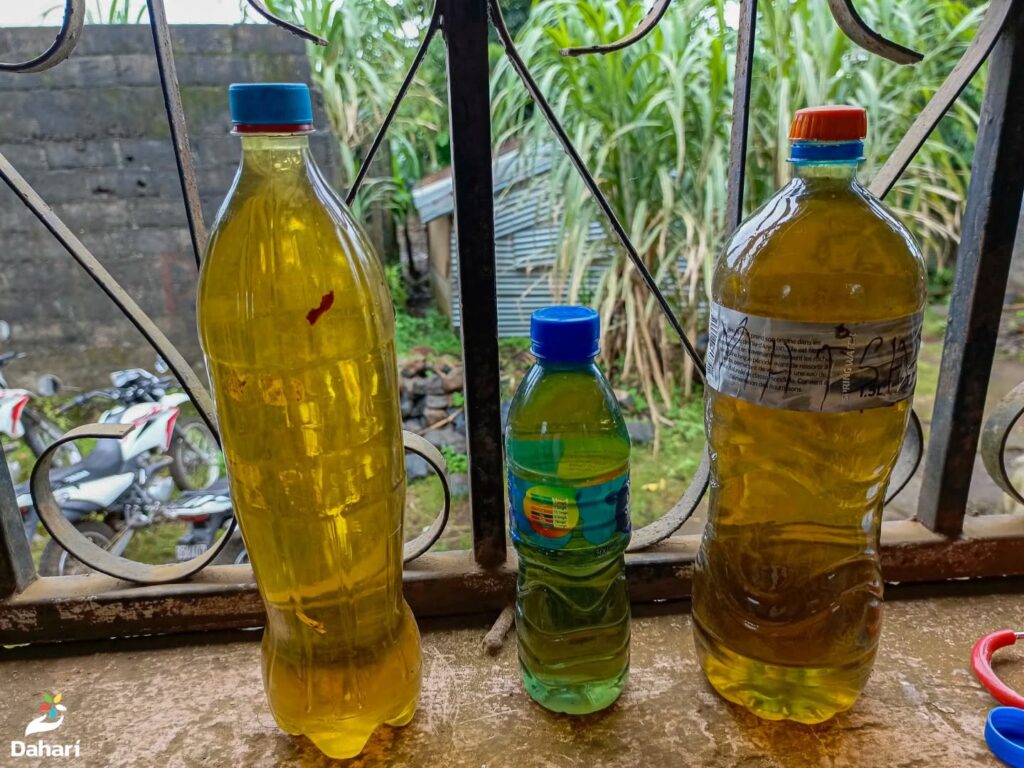
Since 2018, we have been working on natural solutions to control crop pests and diseases. One of these solutions is a plant-based biopesticide made from locally available ingredients which helps protect crops while providing an alternative to chemical products. The original formulation combines several plants and ingredients, including tephrosia, moringa, lantana, lemongrass, chilli, garlic, sunflower, neem and basil.
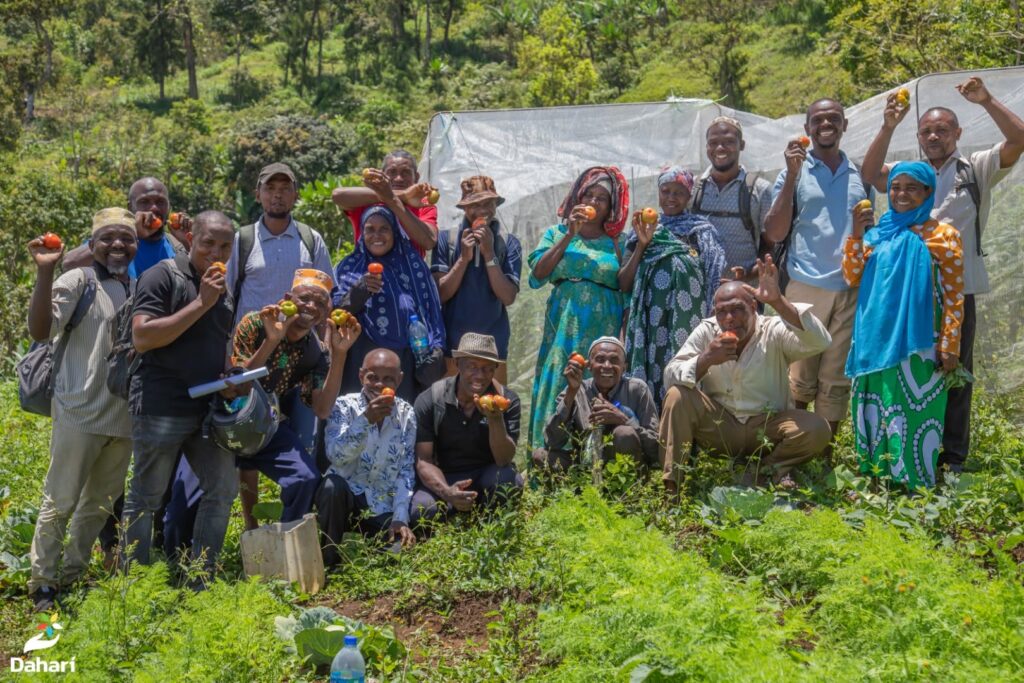
The first farmers to test these products reported a relatively long shelf life and improved quality of fruits intended for consumption. Natural products work very well on tomatoes. They provide good yields with limited losses. People come from far away to buy my tomatoes because they do not spoil quickly and they taste good. Hidaya Hakim, a farmer from Dzindri.
Ongoing trials to better target key pests and diseases
This initial natural formulation was developed to provide general crop protection. We are now conducting more targeted trials to assess the effectiveness of different formulations against specific pests and diseases affecting farmers’ crops.
Together with our farmers we have identified crops that are widely cultivated in the Comoros and particularly vulnerable to diseases, requiring greater attention in terms of crop protection :
- On Grande Comore, trials focus on controlling late blight, the main disease affecting potatoes, as well as powdery mildew, which affects carrots.
- On Anjouan, trials focus on controlling Tuta absoluta, a major pest of tomatoes, as well as fruit flies, which frequently affect cucumbers.

« At first, we developed a product containing around ten ingredients based on locally available plants. The product proved effective during three years of trials, from 2019 to 2021, and farmers confirmed its effectiveness. However, our farmers found the number of ingredients required to prepare the product too high. We have now improved the formulation and reduced it to just two ingredients. At the same time, we have developed several products targeting the specific crop protection needs we identified. For cucumbers, for example, we use only Tithonia leaves and garlic. For tomatoes, the formulation is based on neem and garlic. »
Mourdi Mohamed, Senior Agroforestry Technician
Our objective is to determine whether these biopesticides can become effective, accessible and more environmentally friendly alternatives to chemical pesticides, while strengthening farmers’ resilience to crop pests and diseases.
A farmer-centred approach to testing and developing solutions
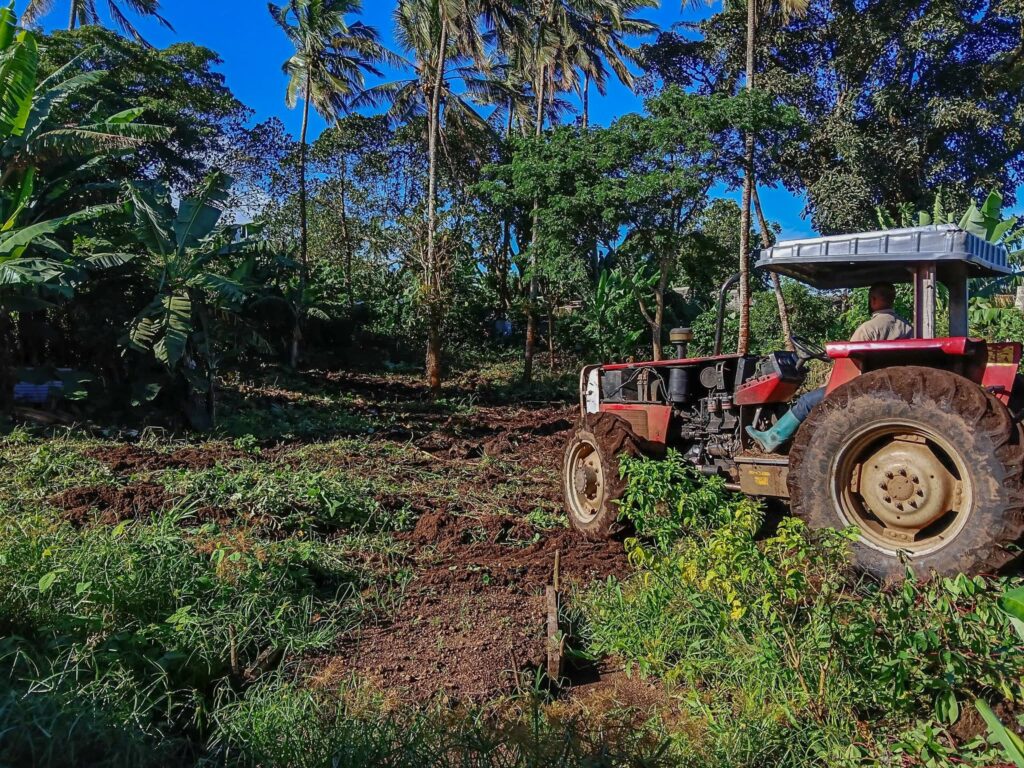
For Dahari, the development of these practices is based on close collaboration with farmers. Solutions are not simply presented as ready-made practices. Instead, they are tested directly with farmers, in their own fields and under local climatic conditions, allowing us to assess their effectiveness in real-life farming conditions.
On Grande Comore, this approach is also supported by the establishment of a demonstration site, in the centre of Maoueni village, located close to farmers in the area. The site serves as an agroecological model for training and showcasing sustainable agricultural practices adapted to local realities.
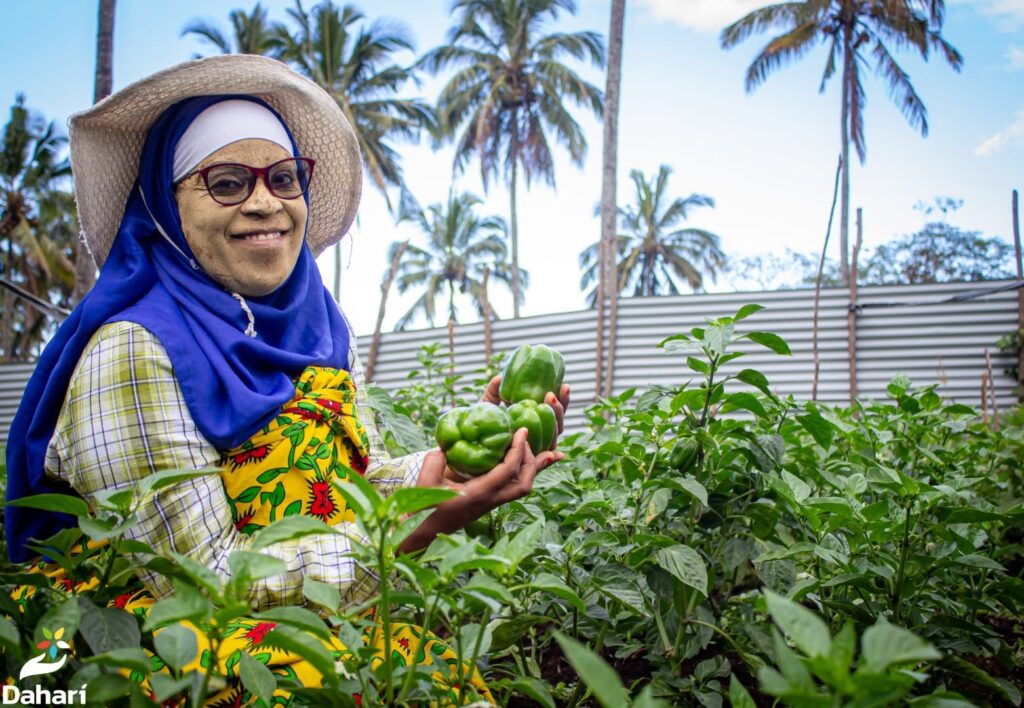
Through this approach, our aim is to gradually contribute to reducing the use of chemical pesticides and promoting more sustainable agricultural practices, making the most of locally available resources as well as farmers’ knowledge and experience.