11 September 2020
Three years with the European Union in numbers
The «Agricultural Development Model Expansion» project, implemented between 2017 and 2019 and funded by…

The passage of Tropical Cyclone Kenneth from April 23 to 24, 2019, left a lasting impact on the people of the Comoros, destroying homes and wiping out a large portion of their agricultural crops. Farmers in the villages where the organization Dahari operates—both on Anjouan and Grande Comore—were not spared; in some areas, 50% to 90% of banana plants were destroyed. The case of Mohamed, a member of the Ujamaa cooperative in Sérehini—a partner of Dahari—is particularly striking. Just ten days earlier, a joyful Mohamed had proudly shown off three rows of banana plants he had cultivated around the perimeter of his plot, using an agroecological planting technique taught by Dahari—a practice he had adopted following an exchange visit to Anjouan. There were more than 63 bunches of bananas—comprising both improved (FHIA) and local varieties—that had not yet reached maturity. After the cyclone, Mohamed lost everything; Kenneth destroyed it all. Thousands of similar cases can be found across Anjouan.

Following this disaster, Dahari launched an aid program for victims on the island of Anjouan. The NGO's first intervention was the organization of a large market in Mutsamudu on May 4, 2019, to recover and quickly sell the remaining produce to affected farmers in order to minimize the effects of the devastation. Furthermore, recognizing the risk of food insecurity for vulnerable farmers severely impacted by the cyclone, the NGO urgently mounted an exceptional intervention to assist 1,500 to 2,000 families. This project, entitled "Reviving Agricultural Production in Anjouan After Cyclone Kenneth," is funded by The European Union and Department of La RéunionThe project is designed in collaboration with the regional committee of the Comorian Red Crescent in Anjouan—working through village committees and with the participation of community leaders. The first phase of the project involved the emergency distribution of seeds for short-cycle crops (such as bok choy, peanuts, mung beans, *brède mafane*, amaranth, carrots, and corn), with the aim of enabling farmers to resume their agricultural activities as quickly as possible and to achieve a harvest within two to three months.

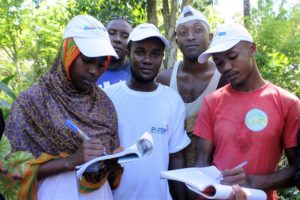
In July, seeds were distributed to 1,844 vulnerable families identified in areas deemed critical, accompanied by brief training sessions on cultivation. The effort targeted the hardest-hit localities within twenty-five villages most severely affected by the cyclone—namely Bimbini, Iméré, Vouani, Darsalama, Boungweni, Adda, Outsa, Ouzini, Chiwé, Mirontsy, Bazimini, Nyantranga, Koki, Pomoni, Lingoni, Nindri, Kowé, Moya, Chaweni, Mrémani, Nyamboimro, Kangani, Koni Djodjo, Koni Ngani, and Jimilimé. On the ground, the work was carried out by technicians from Dahari, volunteers from the Comorian Red Crescent, and community leaders, who subsequently received training at the Pagé demonstration center on planting and maintenance techniques for the selected crops.

During the distribution of these seeds, which began on Wednesday, July 17, 2019, the beneficiaries expressed their joy at the launch of this initiative, which will enable them to quickly resume farming and thereby avoid food insecurity. A second phase, starting in November, will focus on reviving food crop cultivation on a larger scale.