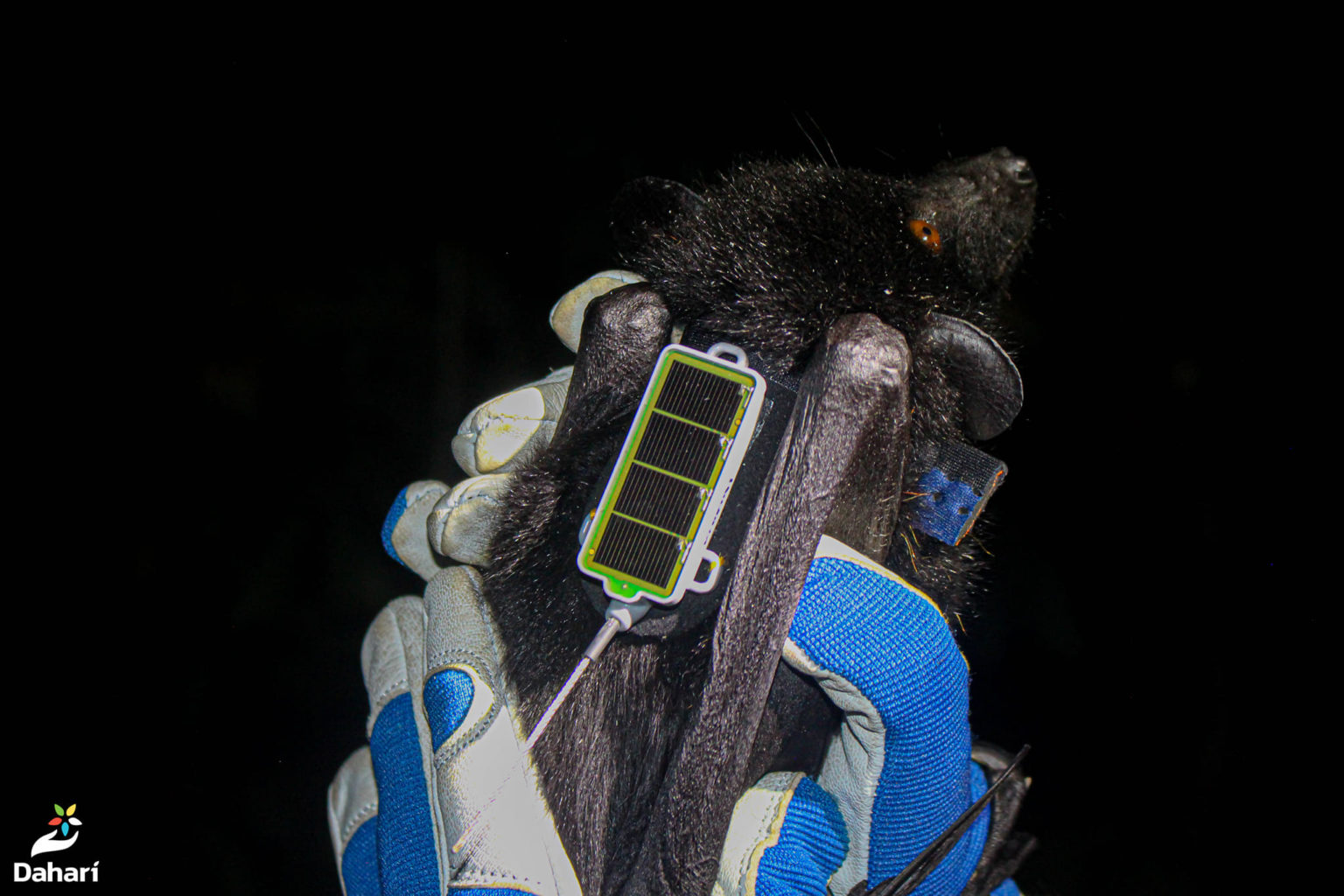
Our work on tracking Livingstone's fruit bats using GPS tags has recently been published in Conservation Science and Practice With title:
The vital domains, feeding sites and daily movements of the highly endangered Livingstone's fruit bat have been revealed through GPS tracking.
Here is the summary:
The Livingstone's fruit bat, Livingston's fruit bat, which is critically endangered, is endemic to just two islands in the Union of the Comoros, a country with one of the highest rates of deforestation in the world. The majority of the bat population is found on Anjouan, where only 10 % of the island’s surface area still has intact forest cover.
Classified as «forest-dependent» species, our aim was to understand bat landscape use and subsequently focus conservation efforts on important resources. To achieve this, we retrieved movement data from 17 individuals fitted with GPS tags between May 2022 and October 2023, during both the dry and wet seasons. We identified home ranges, potential foraging sites, and daily movement behaviours.
The potential feeding sites predominantly consisted of forests and agroforests, the two vegetation classes with high tree cover. Marked bats travelled similar distances during the day and at night, indicating increased diurnal movement compared to closely related species, possibly due to a combination of reduced predation pressure and the need to meet nutritional requirements in a highly degraded landscape.
The results of this study are integrated into a landscape-scale conservation approach implemented by a local conservation organisation in collaboration with communities.