28 October 2025
Livingstone's fruit bat reclassified as «Endangered» thanks to better population data
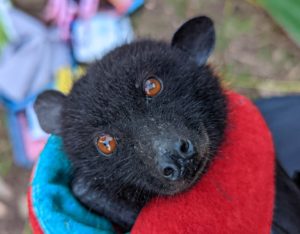
In May of this year, the Livingstone's fruit bat (Pteropus livingstonii) was officially downgraded from the «Endangered' category...
This article was published in the Frankfurter Allgemeine on 7 September 2021 by journalist LAURA SALM-REIFFERSCHEIDT with photographer NYANI QUARMYNE.
Translated from German by ourselves.
Original title and link: An almost lost paradise
7 September 2021 – The Comoros will lose far more than a few old trees if the cloud forests continue to be sacrificed for farmland, construction, and firewood.
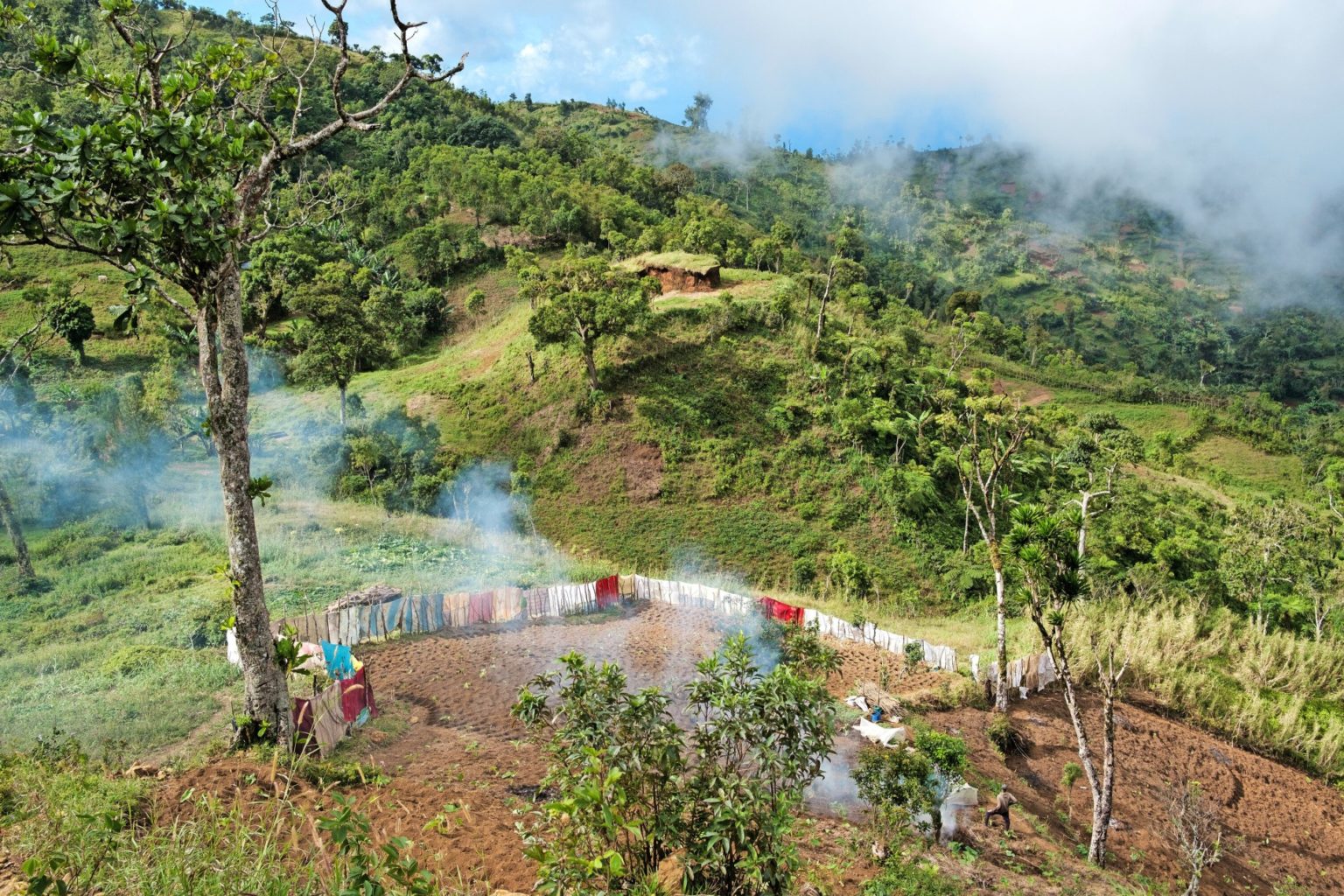
The slope of the field where Sidi Abdoulatif works is so steep that the man in his sixties can barely stand upright: he supports himself with one hand while weeding with the other. This former telephone pole keeper receives no pension and wanted to plant taro, cassava and sweet potatoes to earn an income from his field, which he bought a few years ago when he stopped working. Previously, the land lay fallow, the soil was exhausted, and every rainstorm washed away more soil on the steep slope. Nothing grew there until Abdoulatif planted Gliricidia sepium, fast-growing robinia trees belonging to the legume family. This tree, rich in nitrogen, whose roots help draw up water and strengthen soil stability, also increases its fertility. Furthermore, its leaves are used as fertiliser or fodder for livestock.
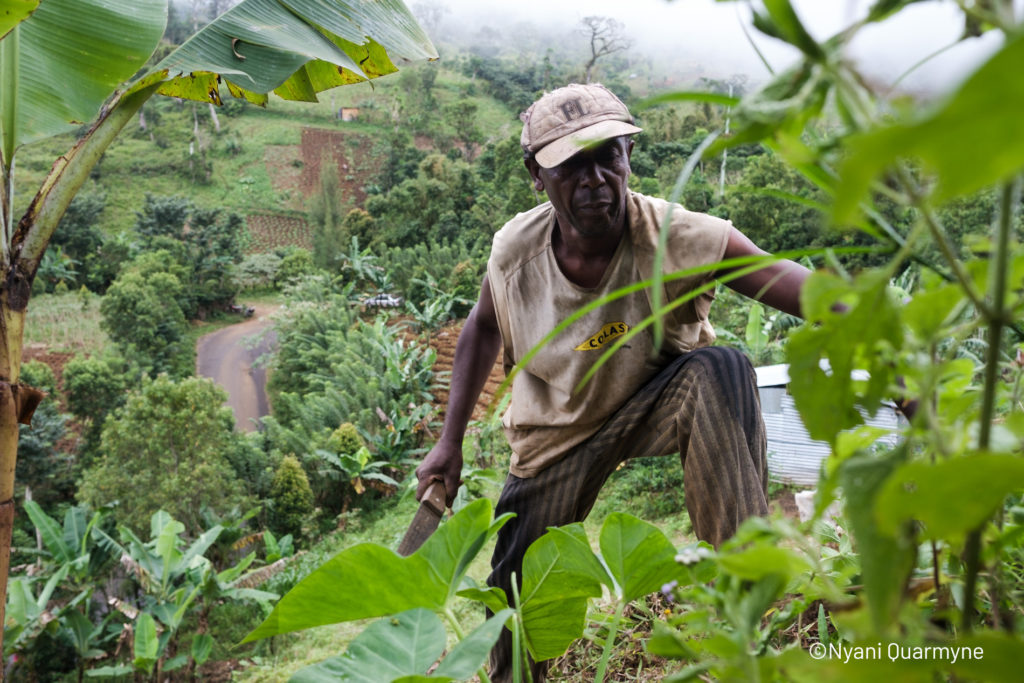
The field is located about 700 metres above sea level, near the village of Adda-Daouéni, on the southern side of the volcanic island of Anjouan. Along with Grand Comore and Mohéli, it is one of the three main islands of the Union of the Comoros, in the Indian Ocean, between Mozambique and Madagascar. The neighbouring slopes of Abdoulatif's property are divided into plots cultivated by smallholder farmers. «I was young at the time, but I remember well that this area was still a real forest until 1997,» says Samirou Soulaimana, 36, a reforestation expert for the environmental organisation Dahari. But in 1997, Anjouan separated from the Comoros and the island was placed under embargo. This was followed by a period of oil and construction material shortages. The inhabitants of the region therefore took chainsaws and cleared a large area in a short time. «We really did a lot of damage during that period,» says Soulaimana. «The figures for Anjouan are very alarming,» confirms Misbahou Mohamed, Co-Director of Dahari, during a meeting in the capital Mutsamudu.
In Anjouan, 80% of the natural forest area was lost between 1995 and 2014. Whilst Grande Comore and Mohéli have experienced a sharp reduction in forest cover, the embargo should not be regarded as the sole cause of deforestation. According to reports by the United Nations World Food Programme, it is the country where deforestation is progressing most rapidly; indeed, only 30% of the Comorian primary forest is thought to remain. Since gaining independence from France in 1975, the population has been growing rapidly; trees are being felled to build new homes, for cooking, and to distil ylang-ylang flowers, the essential oil of which is used by the European cosmetics and perfume industries. Forty years ago, the Comorian population stood at 335,000; today it is estimated at 870,000, of whom 90% depend on agriculture. The rugged terrain of the volcanic islands limits the available agricultural land, meaning that trees are being replaced by fields, which has serious consequences.
Of the 45 rivers on the island, fewer than ten are supplied with water all year round, some only during the rainy season (from November to April) and others are completely dried up.
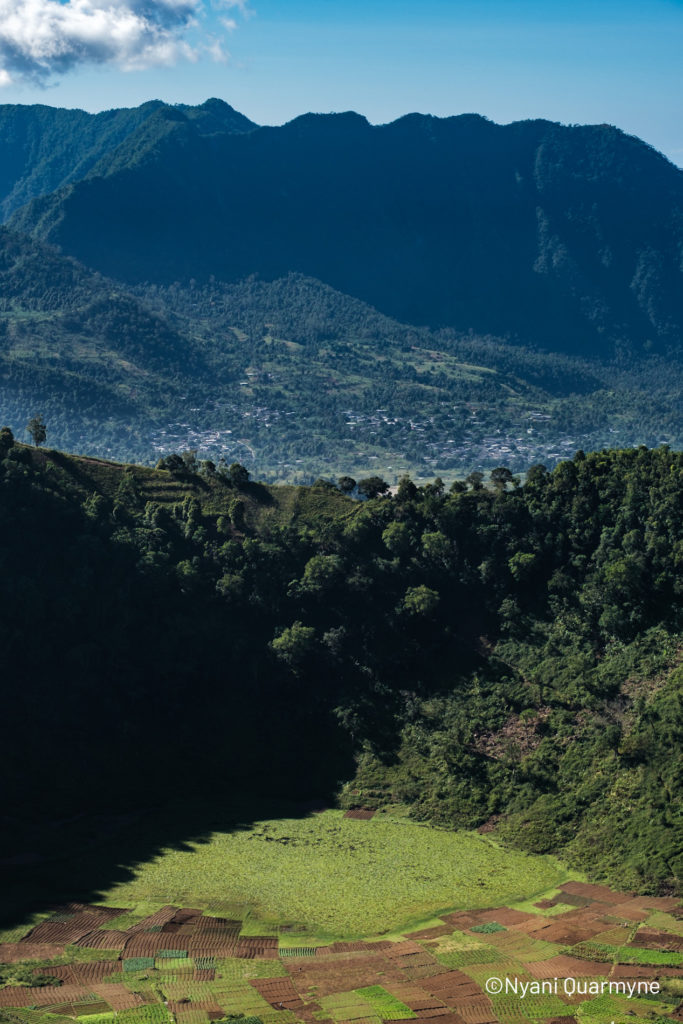
From around 600 metres above sea level, cloud forests are generally found. Anyone who clears these forests disrupts the fragile balance. Ecologist Aida Cuní Sanchez, who researches tropical forests as habitats at the University of York, talks about natural «water towers.» Mist drifting across the landscape touches the leaves, mosses, lichens and ferns that grow on the gnarled trees and condenses. What is not retained by the plants regularly drips onto the ground. Under the cloud cover, the air remains moist and cool. «This reduces the rate of photosynthesis. Organic matter also decomposes more slowly in this environment, the soils are poorer in nutrients,» explains Cuní Sanchez. As a result, trees in «cloud» forests grow more slowly but store more carbon. The root system absorbs water like a sponge and slowly releases it into the environment, regulating the flow. Felling a cloud forest has considerable consequences, Cuní Sanchez explains: «When it rains, the water simply runs off. During the dry season, there is a shortage of water because there is nothing left to retain it.» The ecologist sees another danger in climate change. If it gets warmer, the cloud cover rises, the clouds no longer enwrap the trees and remain as drops – the water towers lose their flow.
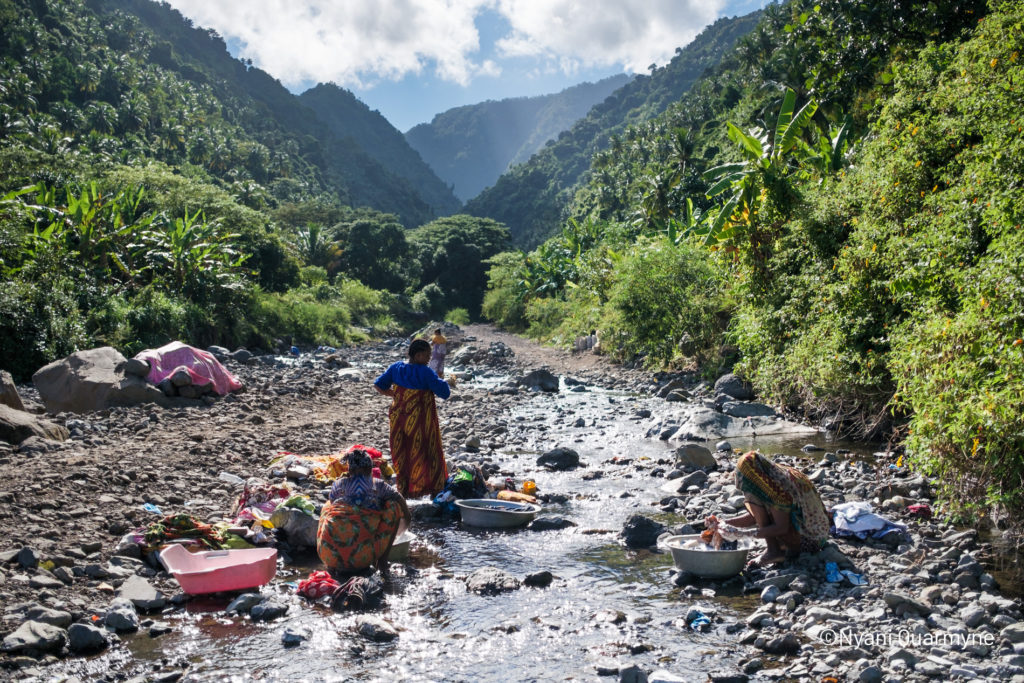
«We haven’t had any rain since Ramadan,» says Ali Mohamadi Hafidhou. He is a teacher in Mramani, a village located at the southern tip of Anjouan, where deforestation is extensive. This was two months ago, and problems were predictable. The cisterns, which are fed by springs or underground rivers, are quickly emptied by the women and children who come to fill jerrycans. «We know that rain comes from the forest and the ocean,» says Hafidhou. Yet, the trees are cut down: «Poverty is responsible.» During the dry season, villagers have to travel long distances to fetch water or wash their clothes in a river that has already dwindled to a trickle. «Sometimes we have to buy water, which is delivered by trucks.» Twenty litres costs about 250 Comorian francs, the equivalent of 50 cents.
The changes are already having an impact on agriculture. The soils are drier, the rain washes everything away faster, and the harvests are poorer. Farmers, meanwhile, are using fertilisers and clearing forest in ever higher, ever steeper regions. But clear-cutting also increases the impact of hurricanes. Before «Kenneth» hit the coast of Mozambique in April 2019, the cyclone passed over the Comoros. Several people died, and it was in Anjouan that Kenneth caused the most damage.
This is compounded by the nation's political instability. Since independence, there have been over twenty coups d'état and various secession attempts. The presidency is meant to rotate between the islands and change every four years, but in 2018, a constitutional amendment granted the incumbent president, Azali Assoumani (from Grande Comore), a new term – much to the chagrin of the inhabitants of the other two main islands: Anjouan and Mohéli.
Poor infrastructure hinders economic development: electricity is intermittent; waste ends up on the beach and in riverbeds as there is no landfill. Furthermore, citizens often take on governmental tasks; villagers repair potholes on roads, for example, and collect a small toll from passing cars and lorries. A good quarter of the gross domestic product is provided by remittances from the Comorian diaspora, which has improved living standards on the islands and reduced the poverty rate. Nevertheless, the lack of prospects has already led thousands of people to flee to the neighbouring French overseas department: Mayotte.
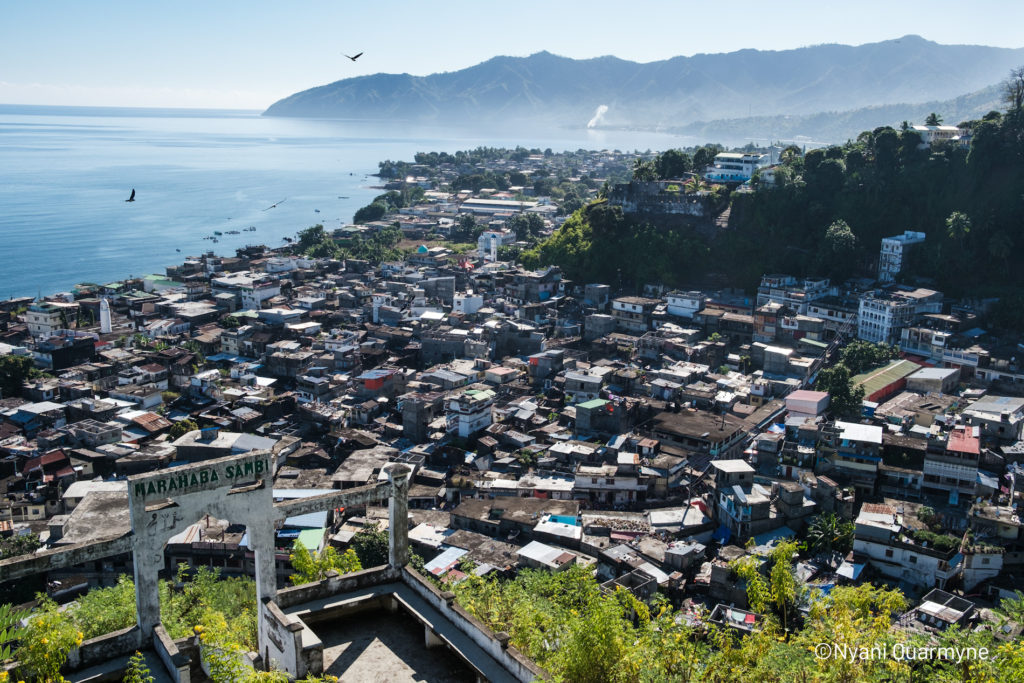
Geographically, the Mayotte archipelago forms part of the Comoros archipelago. In 1841, it came under French protectorate until a referendum on independence was held in 1974. The results were tallied on an island-by-island basis, and in Mayotte, the majority of residents voted against independence. Politically, it now belongs to France as its 101st department, and since 2014 it has been part of the European Union as one of the nine «outermost regions» – making it a dream destination for all the other inhabitants of the archipelago. For the minority who enter legally, wages are paid regularly, there is social security, the standard of living is higher, and healthcare is better. As for the majority, they have entered the country illegally, live in hiding in precarious conditions and earn a meagre income from their work in the fields.
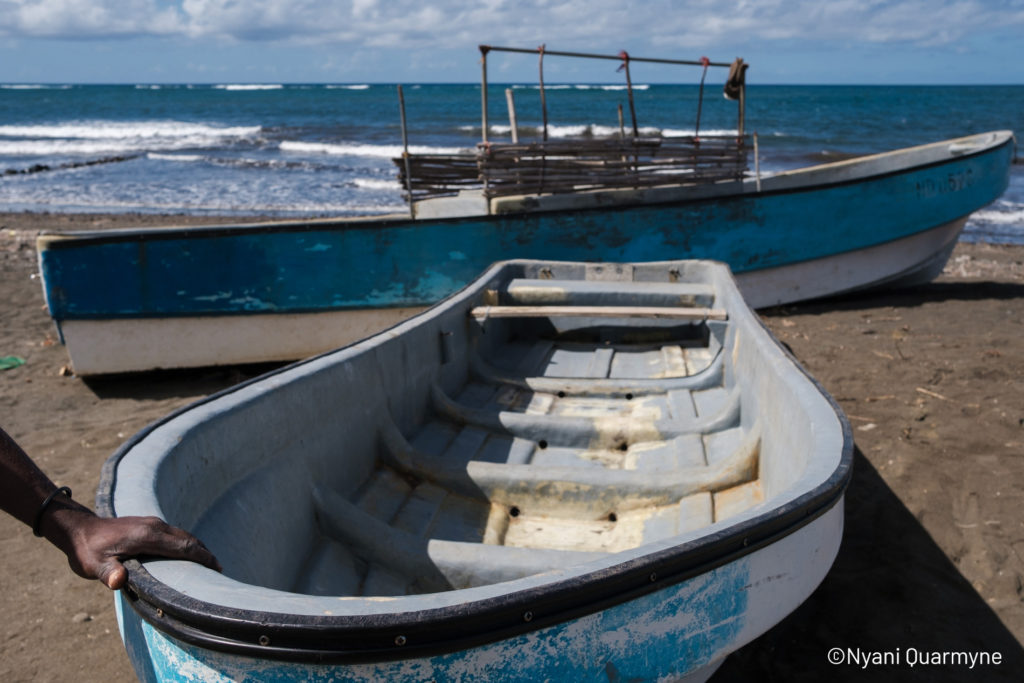
A young man points out to sea on Bambao beach, a small town on the east coast of Anjouan. Somewhere in the mist lies the French island. In fact, it is very close, only about sixty kilometres away. He takes his clients to Mayotte in a «kwassa kwassa», a small motorboat, which currently costs around 400 euros. Not all boats make it. «Far too many families, mothers, fathers, brothers have already been lost at sea,» says the 25-year-old boatman. According to a French Senate report, between 1995 and 2012, between 7,000 and 10,000 Comorians died trying to reach Mayotte. The Governor of Anjouan even speaks of up to 50,000 deaths. Attoumani Kombo lost his daughter five years ago. The 75-year-old sits in front of his general store in Bambao, on the road leading to the beach. «A big wave capsized the boat. My daughter couldn't swim.» But that hasn't stopped her siblings from embarking on this dangerous adventure too. 5 of his 10 children now live legally in Mayotte. «But even without papers, they would have a better life there than here in Anjouan,» Kombo believes.
Not everyone shares this view; one of Sidi Abdoulatif’s sons lives in Mayotte. «He must be hiding there because he doesn’t have any papers. He can’t work legally at all. If he were here, we could work together in the fields.» The farmer does not feel that the situation in the Comoros is as bleak as some seem to claim. His situation has improved. Since he planted black locust trees around the field, the harvest has been more abundant. Anli Ousseni, who cultivates a field on the opposite slope, has also planted trees in his potato field. «Everything that grows here is now thriving better and is much greener. Before, the plants were often parched and yellow.» And he himself can now work in the shade. The farmers are supported and advised in this agroforestry approach by the Dahari organisation. The focus is on improving the farmers’ economic situation in order to protect the natural resources that still remain.
«We used to have a reforestation policy that was not suited to our country’s circumstances,» explains Zalhat Bacar, Regional Director for the Environment and Forests in Anjouan, referring to programmes dating back to the 1980s in the Comoros which were not very successful. Farmers were not involved, as decisions about which trees to plant on their land were made without their consent. At the time, they were given food in exchange for planting a tree. «People realised that every time they planted a tree, they received something in return. So they would uproot the young trees at night or pour hot water over them and then claim they had died,» says Misbahou Mohamed from Dahari. The farmers saw no direct benefit to their crop yields from these trees, which were taking up their space.
«He should say, «This is my tree, on my land, and I understand why I'm planting this tree here.»».
MISBAHOU MOHAMED, DAHARI
In contrast, Dahari takes a participatory approach: farmers decide what benefits they want to derive from the trees – shade, water storage, fertiliser, fruit, animal feed, medicinal plants, timber for construction or firewood. The organisation’s staff then determine which trees fulfil these functions and whether they can thrive under the given conditions, such as location, climate and water availability. Seedlings can be obtained from nurseries supported by the organisation. This does not mean that «the tree comes from Dahari and they plant it on my plot», explains Mohamed. «Rather, it’s «This is my tree; I’m planting it on my land, and I understand why».« After six months, the farmers are visited again to check that everything is going well. This follow-up helps to improve the programme, and Mohamed is pleased with it. 110,037 trees were planted in 2020, some of which were cuttings, others pre-germinated seedlings, and of these, 71 % survived the first year.
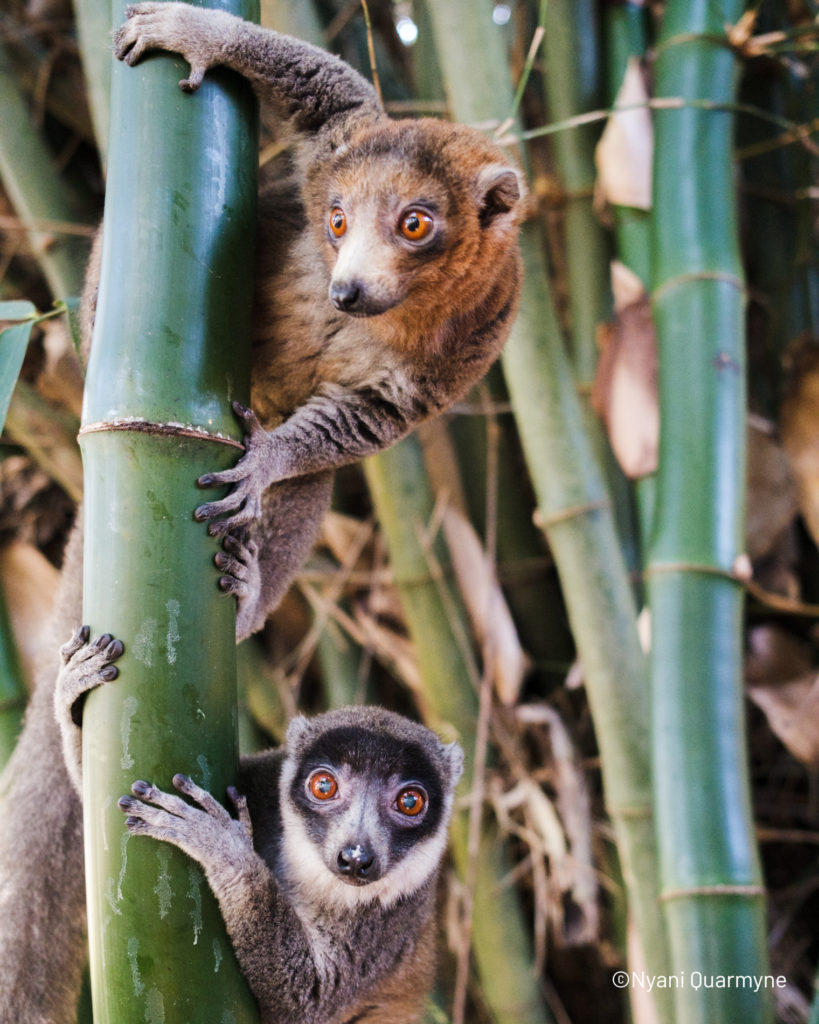
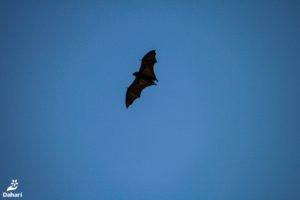
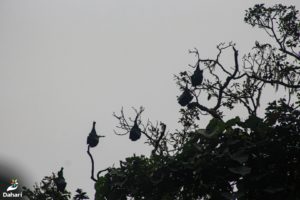
Through this planting system and other methods that boost the fertility and productivity of lowland areas, the organisation aims to help reduce pressure on the remaining forested upland areas. This is particularly important in regions where water sources and endemic biodiversity need to be protected. As well as numerous bird species, the remaining «cloud» forests are home to the mongo macaque, an endangered primate species, and Livingstone’s bat. Around 1,200 individuals of this rare fruit-eating species live exclusively on Anjouan and Mohéli, where a team from Dahari has been studying their behaviour for years. Some key roosting sites – usually one or two trees at an altitude of 500 to 1,000 metres – are located on private land, which is gradually being cleared. With a wingspan of up to 1.4 metres, these are the largest bats in the world. To protect their habitat, Dahari works with landowners: in exchange for them agreeing not to clear-cut or reforest their land, they are helped to improve the productivity of their existing fields. There is also money to be made from tourists: «People come from abroad to see the animals. They then tell others about it,» explains Dhoul-Kifl Attoumane, who has set up a roost on his land, in a narrow, densely wooded gorge, and proudly shows it to visitors.
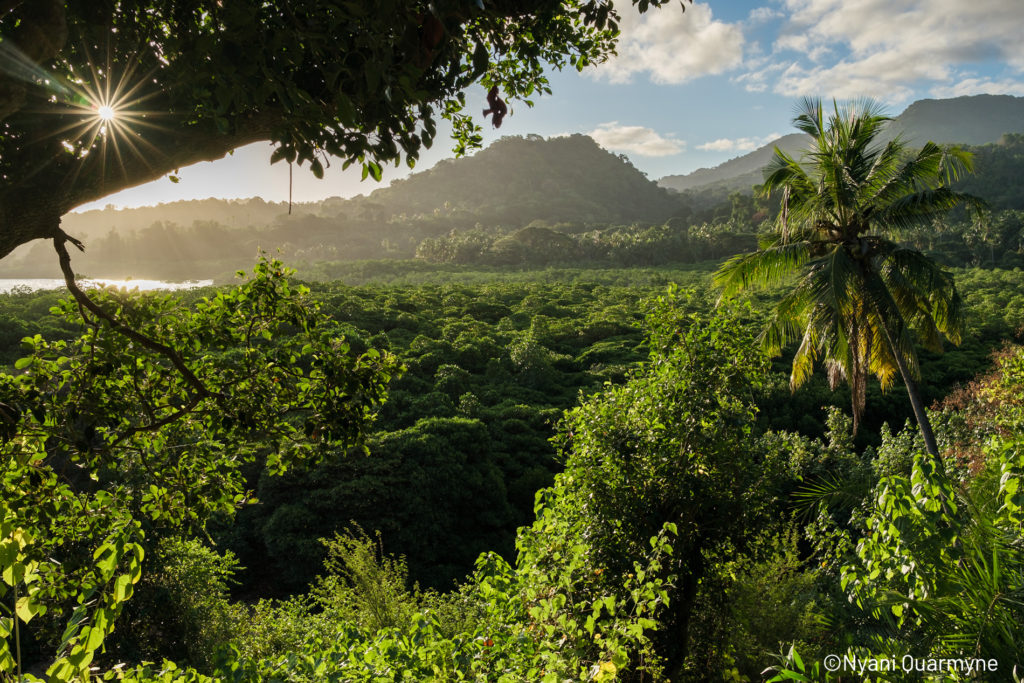
Ben Anthoy Moussa, who works as a project manager for the national park on the island of Mohéli (which is smaller and less populated than the others), is also pinning his hopes on tourism. The tourism industry is still in its infancy, he says. «We now hope it will be developed further to generate alternative sources of income and reduce pressure on natural resources. » To achieve this, he says, more investment is needed – as well as better education for the local population. Moussa is optimistic about the island’s future: biodiversity remains intact, and deforestation has even slowed in recent years. This is no doubt because almost the entire land area of the island was incorporated into the national park in 2015; when it was first established in 2001, the park comprised only the surrounding reefs and the sea. Mohéli has been a UNESCO biosphere reserve since 2020. «We have solutions to reduce the negative impacts. But this requires everyone’s cooperation,» says Moussa, who would like to see greater commitment from the government, for example in enforcing the laws regulating deforestation and hunting. Virtually no perpetrators are punished. But that could change: many political posts are held by young people, including many women. «I’m very optimistic. The older generation thought differently, but we young people have a new vision,» says Zalhat Bacar, the 37-year-old director of the environment and forests. «We speak the same language. We want sustainable development, healthy communities and healthy forests.»
Leaf by leaf
Most of the time, we take trees for granted, even though they are essential to our survival – and not just as fruit-bearers or carbon sinks. In 2021, the European Centre for Journalism eight research grants will be awarded to European media outlets to promote reporting on global development issues. Three projects from German newspapers, including the Frankfurter Allgemeine Sonntagszeitung, are among the selected candidates; the total funding amounts to 900,000 euros, supported by the Bill and Melinda Gates Foundation.
Thanks to this «European Development Journalism Grant», F.A.S.«s science department, working with independent writers and photographers, will continue the »Tree Palaver" project in the coming months. This project is based on the fact that palaver trees traditionally represent the centre of African villages. Through a series of articles, we aim to draw attention to the trees themselves, their function, and their importance to us humans. Not only as a tool in the fight against climate change, but also as an instrument through which people can sustainably improve their standard of living, their health, and their environment. How do forests contribute to our health and well-being? What happens to villages or cities that lack trees? And how do ecosystems interact, especially in the face of epidemics, as humans increasingly encroach on the habitats of animals and plants, destroying forests?
We would like to explore all these questions in different countries and feature people in reports whose ideas are driving sustainable development in their communities, villages and towns.
Sonja Kastilan
The project can be followed over the coming months on FAS, FAZ.net and on Twitter at @baumpalaver.
The Comoros represent the second part of the «Baumpalaver» project.