7 March 2025
Discover our Marine Strategy 2025-2030!
Our new marine strategy draws on 18 months of deliberation with stakeholders at local, national, and international levels…

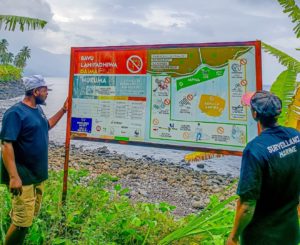
On February 13, local associations Malezi Mema, Maecha Bora, and Fikira Ndjema—in collaboration with Dahari and supported by our partner Blue Ventures—organized the third reopening of fishing on the Vassy reef flat. The event drew over 700 local fishers, all eager to take advantage of the abundance of octopus. This initiative first took root in 2018 and has continued to evolve ever since. Here is the story.
On the morning of Saturday, February 13, 2021, the Vassy reef flat was crowded with fishermen from local villages, all there to take part in a rather extraordinary, bountiful catch. A total of 1,630 kilograms of octopus were weighed that day—compared to the usual daily average of around 500 kilograms. This staggering haul was gathered by the fishermen in just a few hours—and that accounts only for those who agreed to have their catch weighed—following a three-month closure of the reef flat.

The first fishing closure took place in 2018, and things have evolved significantly since then. Initiated by three local associations of fishers—both men and women—their success reflects a local collaboration that has become well-structured over time. While the boat-based fishers’ association, Malezi Mema, was already active before the project, the associations for women who fish on foot—Maecha Bora and Fikira Ndjema—were established with the support of Dahari, an organization that has been working in these areas since 2016. Exchange visits to Madagascar in 2017 and Zanzibar in 2018 inspired the women in the villages to create the island’s first community-based association for women fishers: Maecha Bora. It was also during that same year that the first fishing closure was organized on Anjouan.

The value of closing octopus fisheries for three months lies in the fact that this species experiences exponential growth after the two-month mark, whereas they grow very little during the first few weeks of life. Beyond this essential eight-week respite, they can double their weight each month. Proof that the method works: octopuses caught when the season reopens have, on average, twice the mass of those caught before the closure.

From then on, local associations joined forces to improve these initiatives and increase their effectiveness. If the ban on fishing at ntsontso (metal rod that destroys the natural environment) for the benefit of mwiri (a wooden stick) was implemented during the first closure, while a measure aimed at preventing the harvesting of octopuses weighing less than 500 grams was introduced during the most recent closure. This ensures that the octopuses have reached maturity before being caught. Adjustments have also been made to the site’s monitoring process to ensure compliance with the regulations: women now keep watch over the reef flat during the day, while men take charge at night.

The initiative has been so successful that two fishery closures were organized in 2020 alone. The first took place between January and April, while the second involved date adjustments to better encompass the peak breeding season, with the designated area also being optimized. On February 13th, the figures once again spoke for themselves: an average total catch of 4.5 kg per fisher (more than double a typical catch), with the largest octopus weighing over 7.5 kg—and one fisher even managed the remarkable feat of landing 24 kg of octopus in a single day. These results, which would normally be communicated to the communities during public meetings (not possible due to Covid), will instead be shared via flyers prepared by Dahari.

The initiative has, in fact, become a victim of its own success—despite efforts by the residents of Vassy, Dzindri, Salamani, and Imere to keep the reopening date under wraps. An ever-growing influx of fishers from more distant villages, all looking to capitalize on the local community’s hard work, is threatening the long-term sustainability of the benefits gained from these closures. Solutions are currently being explored to manage this trend and ensure that the participating villages can reap the full rewards of their initiative. Furthermore, the event’s co-organizers have no intention of stopping there: to further strengthen their commitment to protecting the region’s marine resources, a permanent reserve zone is being established off the coast of Vassy. Just one more reason to keep the momentum going!

We would like to thank our financial partners for the marine component, who have supported us throughout this venture: Darwin, TUSK and WWF.