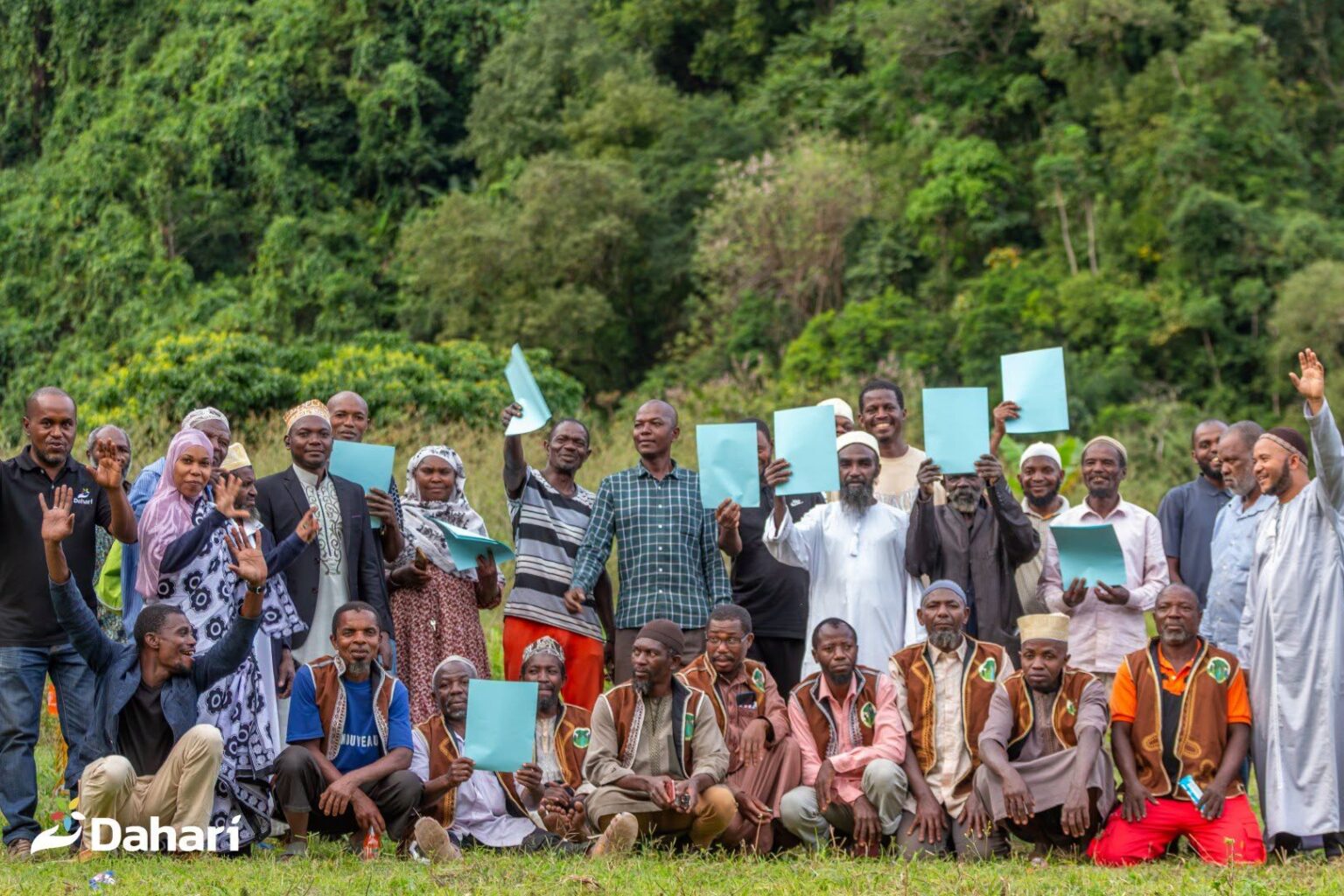
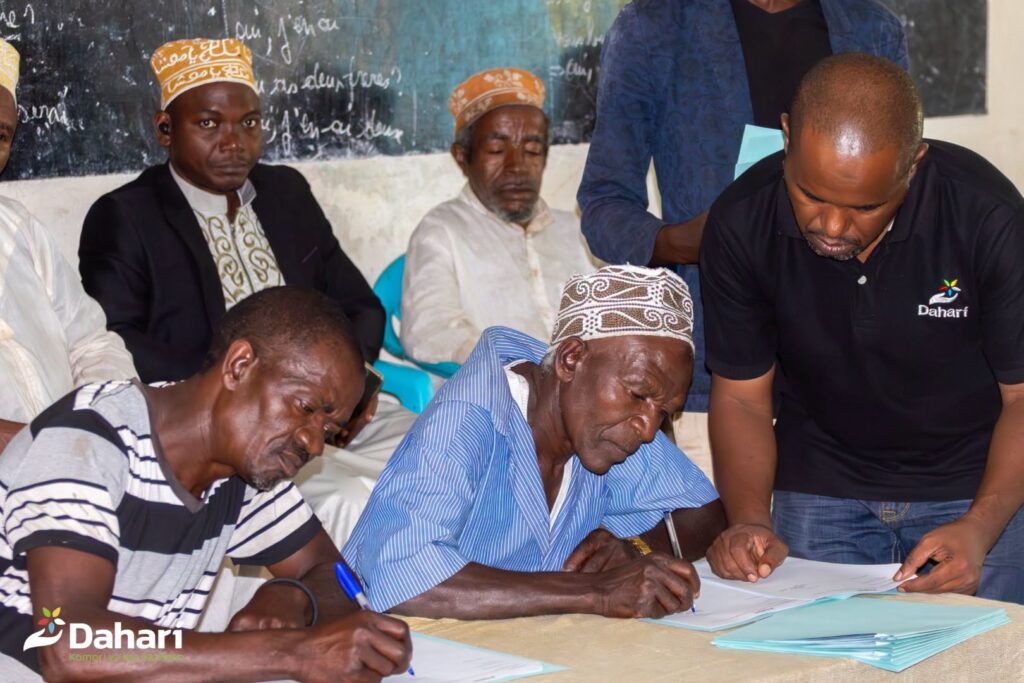
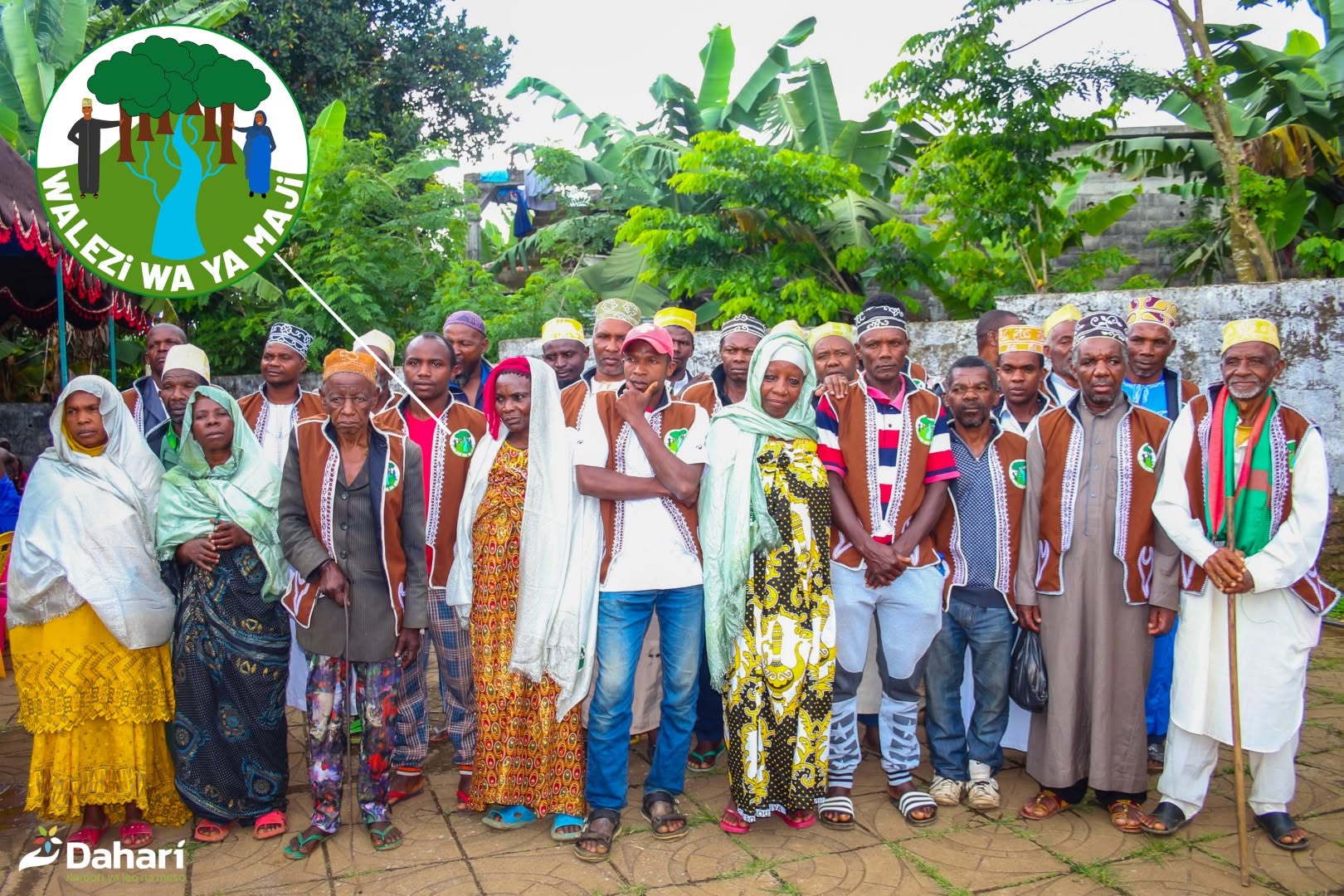
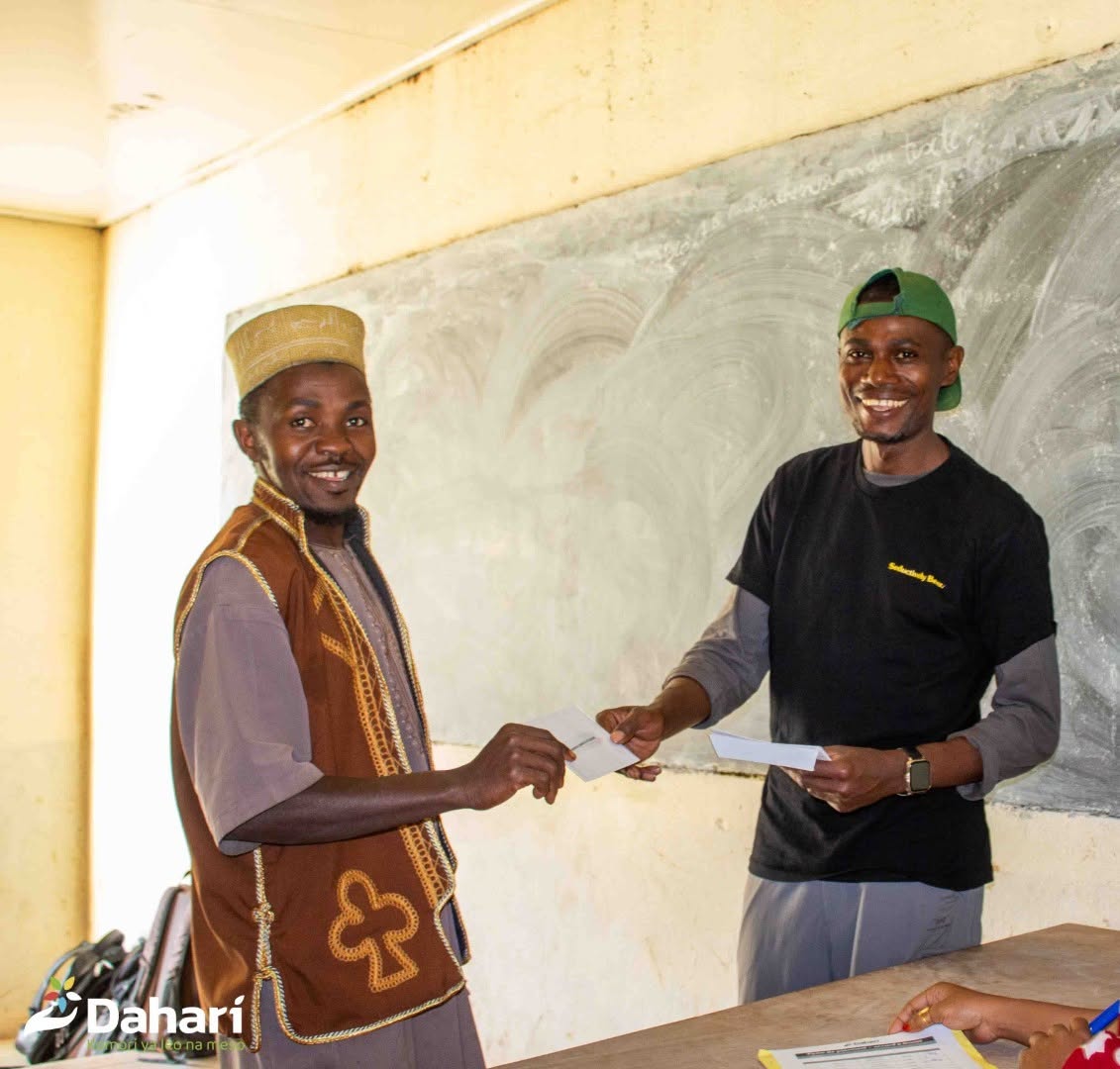
On 21 August, 13 landowners from the village of Ouzini, on Anjouan, signed conservation agreements for their plots in the forest areas of Ntrontroni and Doumbounini. These two sites, close to the village, are under heavy pressure from logging. With this second pilot, our forest agreements are adapting to the areas where the threat to the forest is greatest.
A signing ceremony that reflects growing commitment
The signing ceremony drew local authorities and community leaders from Ouzini and the neighbouring villages of Salamani and Adda. Little by little, the team is seeing real energy around the programme and growing ownership by the communities. The ceremony was marked by powerful testimonies from several longstanding and new Walezi ya Maji, the Water Guardians.
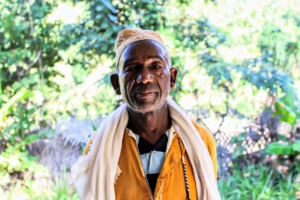
« Our taps are starting to run dry because of the trees being cut down. Today, I am giving part of my land to contribute to this work. These contracts are here to protect our water, first and foremost. I think that after the first agreements were signed here last year, people realised how important they are, and today we are ready to get involved.» — Mr Nadhir Houmadi, new signatory, Ouzini
Looking back at the first pilot
In July 2024, Dahari signed its first 30 individual conservation agreements with farmers from the village of Adda, in southern Anjouan, before extending the approach to Ouzini. The principle: each signatory commits not to cut native trees and to leave their forest plot fallow. In return, they receive a cash payment every six months, calculated according to the area placed under conservation.
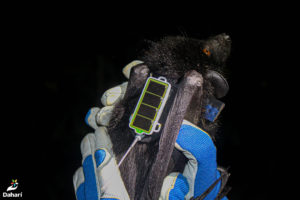
The stakes are high. Anjouan has lost around 80% of its forests in thirty years, one of the highest deforestation rates in the world. These forests protect the villages’ water resources and are home to unique species such as the Livingstone’s fruit bat, a flagship species for terrestrial conservation in the Comoros.
What changes with the second pilot
The first pilot established the conservation agreements programme in the landscape. This was made easier because we targeted ‘inactive’ areas, where little farming or tree-cutting was taking place. To have a real impact, the agreements needed to work where pressure from logging is highest.
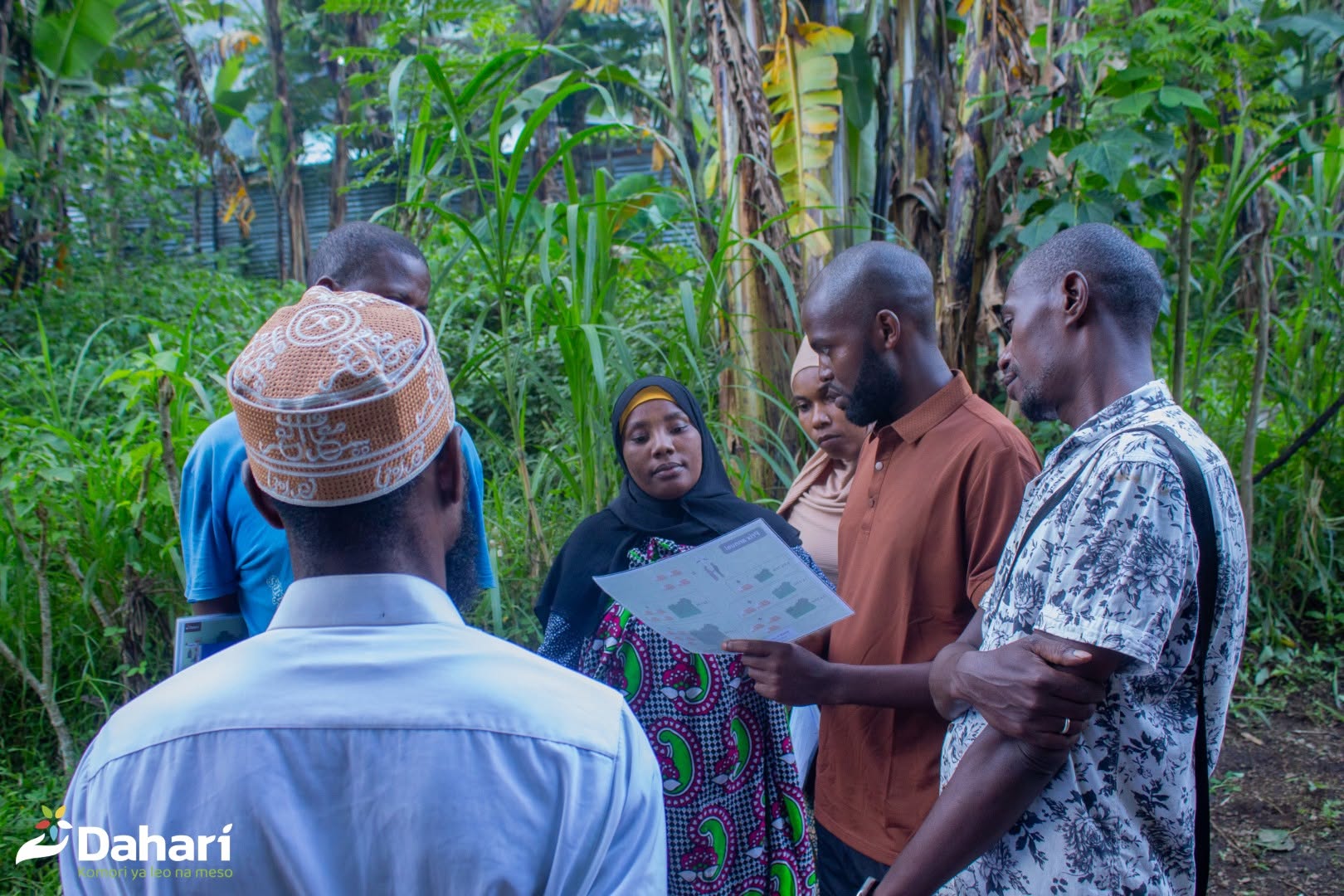
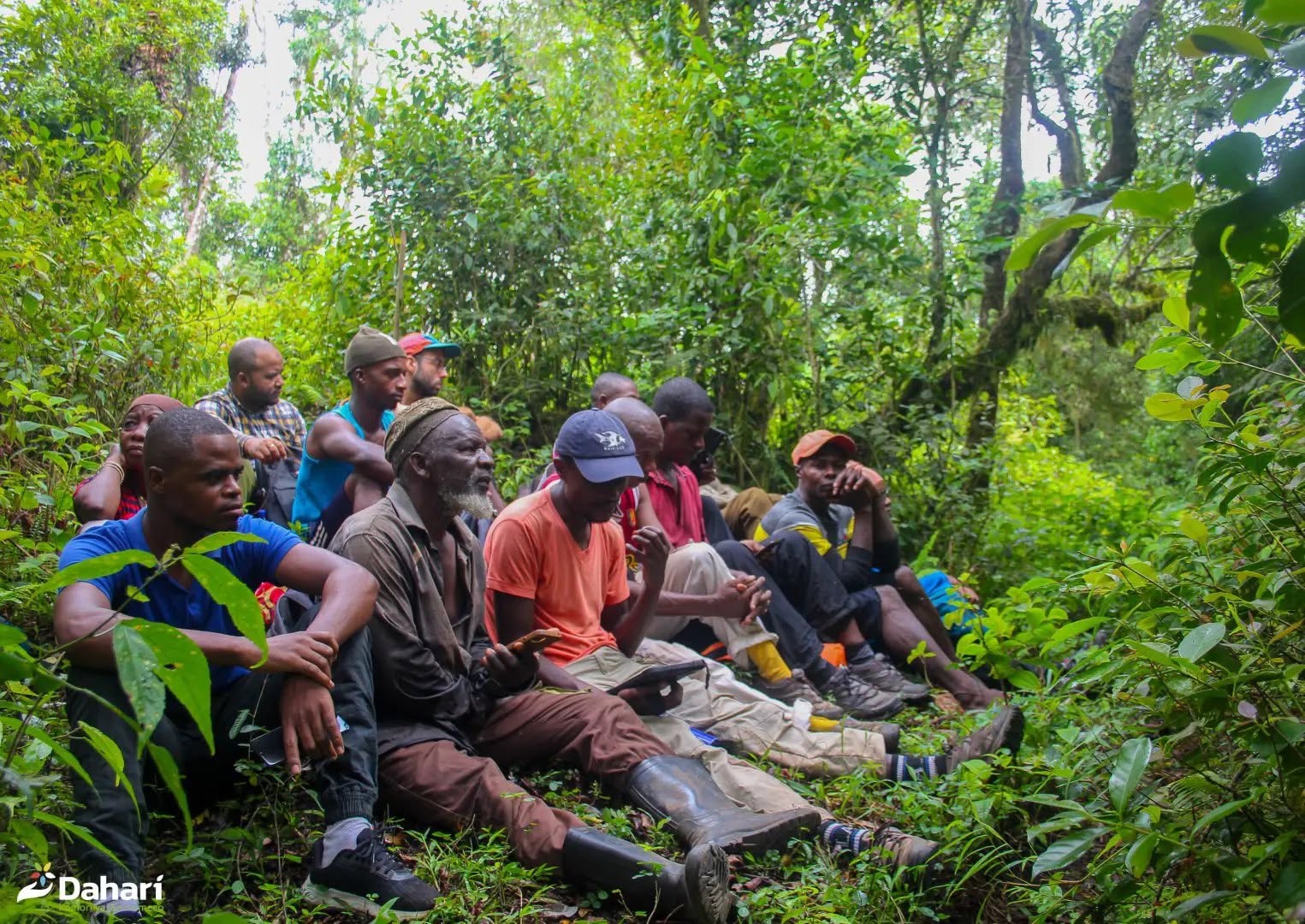
In these active areas, giving up farming or tree-cutting means lost income for landowners. The agreements needed to take this into account. In 2025, we undertook assessments to prioritise forest areas, and social surveys and discussions with landowners to better target the programme’s impact. Our international advisors, Board of Trustees, the Dahari team and village committees all took part in this process. This led to three major changes to the scheme:
- Time to harvest. Signatories have two years to harvest crops already in the ground, but cannot replant. Those currently farming their plot do not lose their harvest.
- Native trees replanted. Landowners agree to their plot being replanted with endemic species by farmers hired by Dahari, and commit to looking after the young seedlings. Restoration becomes active, and the approach brings greater benefits to village residents.
- A bonus for looking after the trees. After three years, a bonus worth two years of the contract rewards signatories who have taken care of their seedlings. This comes on top of the end-of-contract bonus, which aims to encourage renewal of the agreements.
Tree-by-tree monitoring
Satellite images cannot track tree-cutting at the level of individual trees on Anjouan: cloud, shadow, steep terrain and the patchwork of habitats make them difficult to analyse. So we chose a simpler solution. Every tree of marketable size is recorded and marked with a permanent tag.
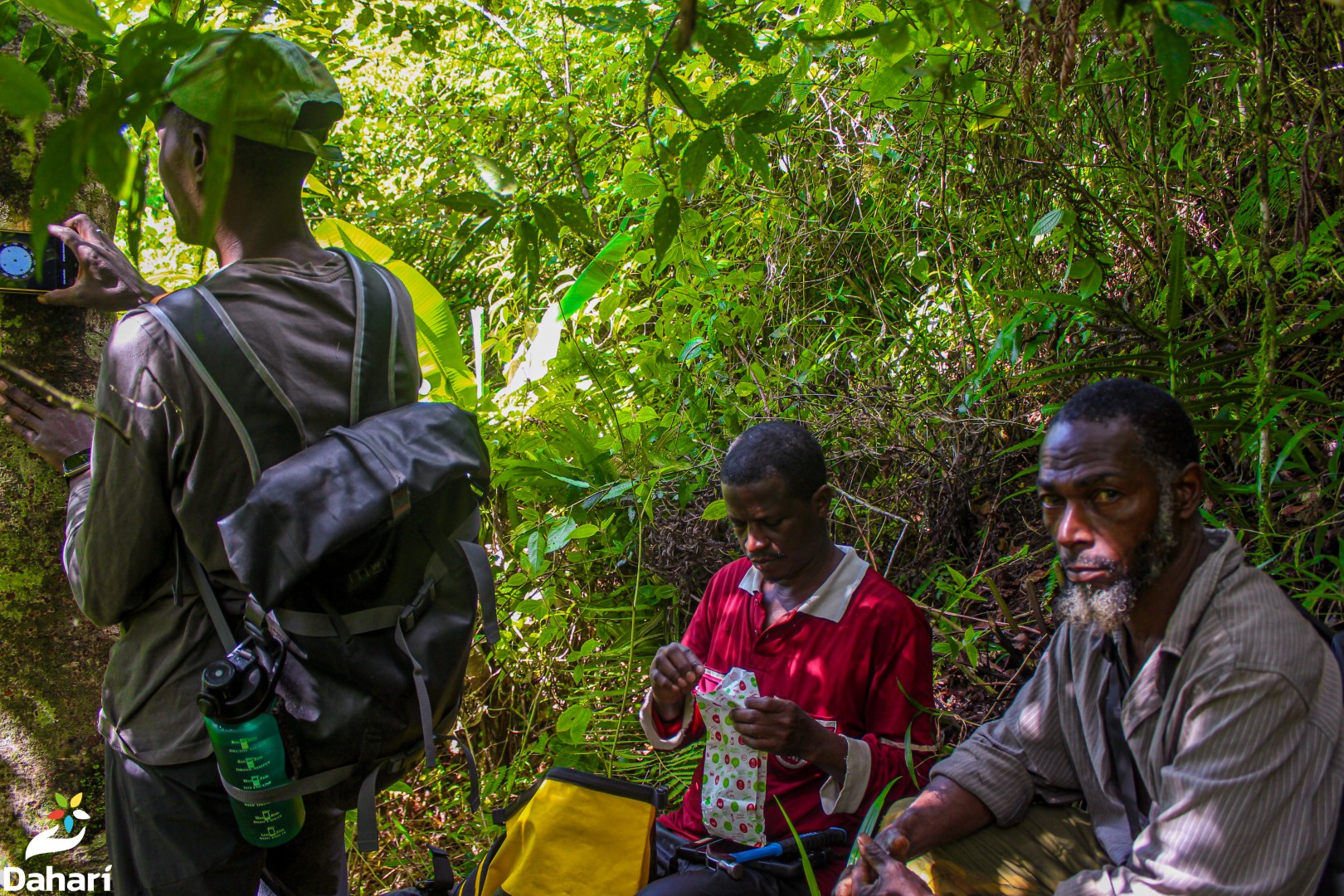
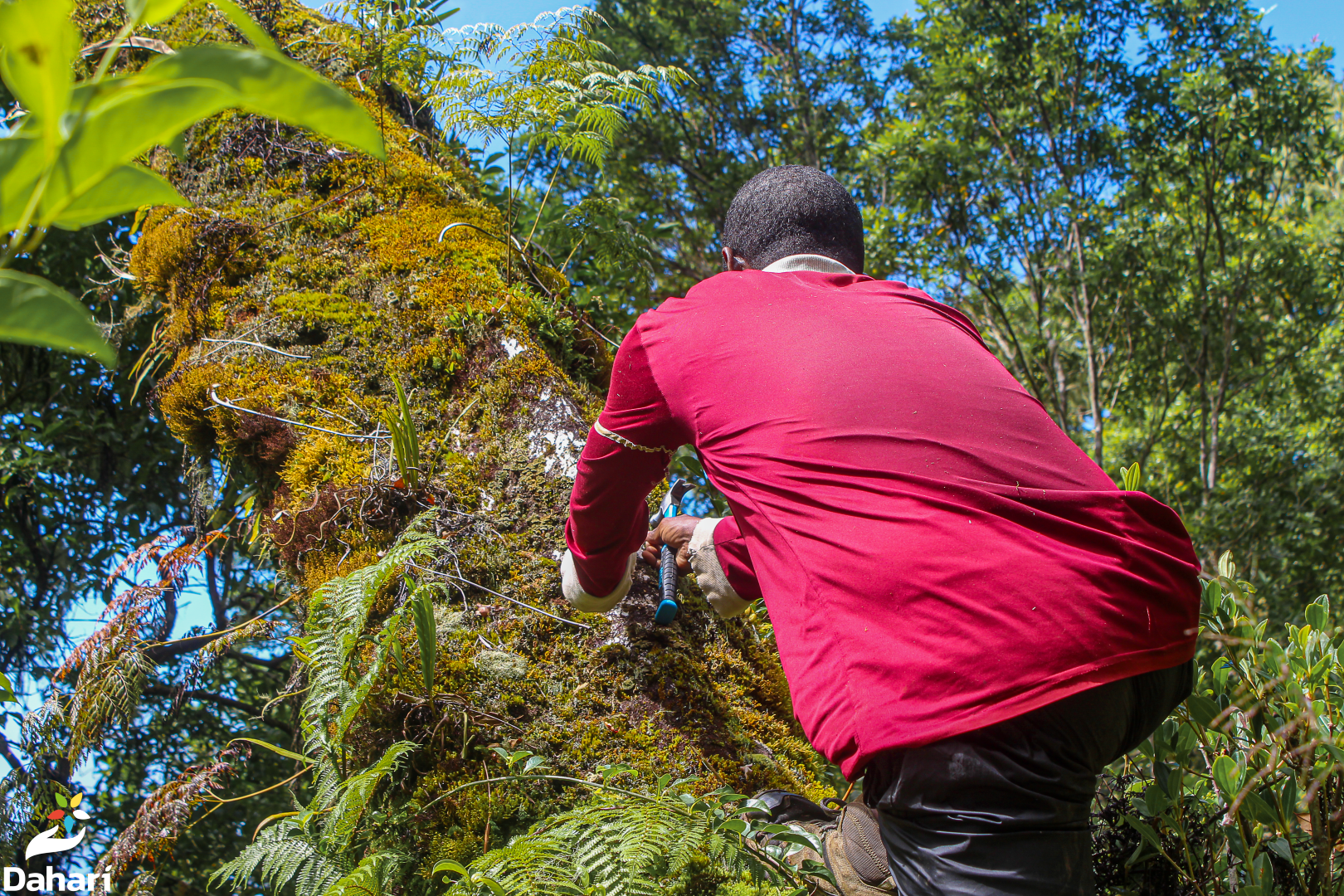
This work is supported by actors involved in the timber trade. They know best how to identify species, as well as the size of trees that can be used for planks or rafters. In this way, they too benefit from the agreements.
What next ?
- A study of the timber trade to identify additional actions to reduce logging pressure, both within the areas under agreement and beyond.
- A third pilot. To check that the agreements work on the other side of the ridge, we will launch a third pilot phase in the forest areas of the villages of Moya, Kowé and Nindri.
- Evaluating impact. With support from our partners, we are continuing to build the framework for monitoring the agreements’ impact by refining our social surveys, continuing hydrological studies and preparing vegetation studies.
These forest agreements are implemented in collaboration with the Ntringui Protected Area in order to transform the struggle against deforestation. Pilot by pilot, the approach is being built with communities, to regenerate a forest that protects Anjouan’s water, soils and biodiversity.
Thank you to Cartier Philanthropy for People and Nature for their support, and to all the expert collaborators from the l’Université d’Oxford, Kings College London, Fauna & Flora and Gret.