5 June 2021
The 2020 Activity Report is available!
We are pleased to present our Activity Report for the year 2020. From the fight against the pandemic to…
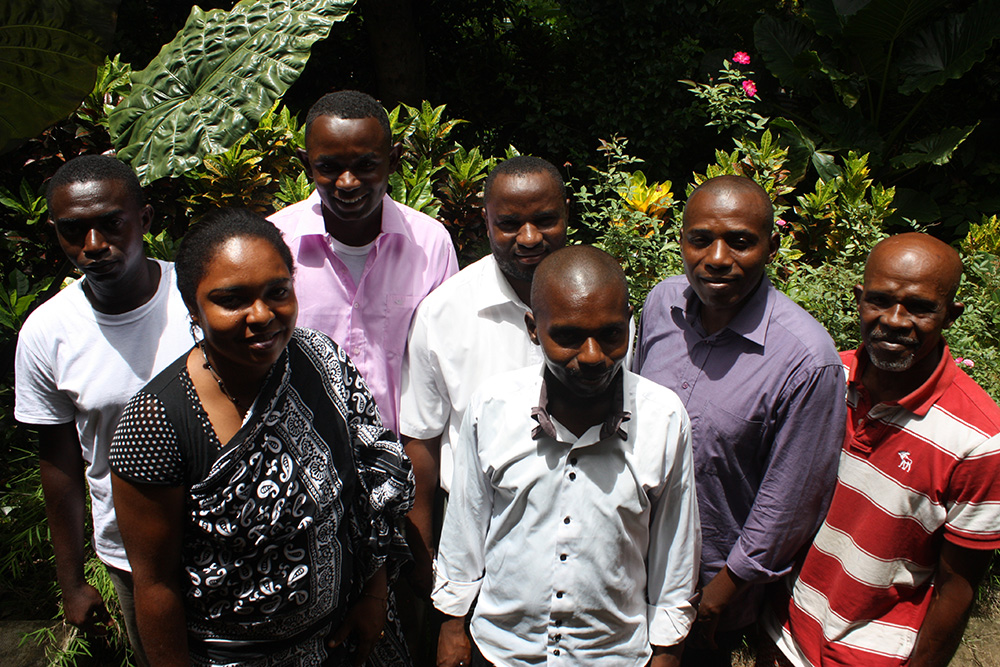
During its first year of operation, the NGO Dahari was able to carry out numerous initiatives to support Anjouanese producers, alongside efforts to strengthen its institutional capacity, integrate into the Comorian landscape and secure its financial stability. To this end, a team of six technicians, based in the villages where the organisation operates, spent 80% of their time working in the fields. These technicians were able to support a total of more than 1,800 people – comprising nearly 400 producers and direct beneficiaries, along with their families.
The first remarkable results concern potato cultivation in the normal and off-season, with 19 demonstration plots across four villages, developed in partnership with the most dynamic producers to showcase improved production techniques such as drip irrigation, compost production, localised fertilisation, and earthing up. These demonstration plots served as learning centres through the Farmer Field Schools that were conducted there.
 The 147 registered beneficiaries not only benefited from quality potato seeds thanks to our CIRAD/FNAC-FA partnership but also strengthened their skills through a cycle of five Farmer Field School sessions, totalling 40 training sessions over the normal and off-season. Based on the data collected, we can estimate that 37.5 tonnes of potatoes were produced from 7.5 tonnes of seeds distributed, generating an estimated income of 102,000 KMF per beneficiary. We thank the Embassy of Switzerland in Madagascar for financing the potato campaign (normal and off-season) and the British Embassy in Mauritius for its financing of the potato campaign (off-season). In parallel, we supported the market gardening campaign with the delivery of 7500g of quality seeds. Using the same methodology (presented above), we were able to support the establishment of 19 demonstration plots, and not only provide the necessary seeds to 251 producers but also strengthen their skills through modules of six Farmer Field School sessions across nine villages, a total of 60 training sessions over the year. We thank the Embassy of Switzerland in Madagascar and the French-Comorian Co-development Programme (PFCC – off-season only) for their support to the 2013 market gardening campaigns.
 Despite some difficulties in mobilising participants, we regard the 48% participation rate amongst farmers – calculated on the basis of those who attended more than 80% sessions – as a success. It is worth noting that we did not spend any per diem allowances, as the farmers came of their own accord and at their own expense. The NGO also supported six entrepreneurs in setting up local agricultural input shops. These entrepreneurs all received initial stock and three technical training sessions on the responsible use of plant protection products (so that they could provide free, high-quality advice when selling products). Five shops will continue to operate in 2014 (the last shop having closed down), despite sales still being insufficient in 2013: building on our trials and the improvements to be made, we hope to make them commercially viable in 2014. These shops were set up with the support of the PFCC. Furthermore, we have also carried out planting campaigns, during which we continued to develop the approach of rotating Gliricidia cuttings managed by village committees. This year, we carried out the scheme in a single pilot village, where we were able to establish 12 plots. Nevertheless, it has been demonstrated that the rotation of cuttings can be a local alternative to costly planting schemes; it can be entirely managed by local communities and incurs no cost. Finally, we helped to improve understanding of the importance of integrating crop and livestock farming amongst more than 300 villagers, by managing 12 demonstration plots for cattle pens with nearby high-quality forage management, and by delivering training on composting in the Farmers’ Field Schools. In terms of improving the approach we take to integrating young people and women into the sector and developing off-season crops, we can share the following results: on average, 32% of our beneficiaries are women (across all forms of agricultural support). Off-season cropping is a recent practice in Anjouan: Dahari is trying to develop it, given its strong potential for increasing farmers’ incomes. However, this requires a solid grasp of the techniques as well as a willingness to take risks, which is why we are very pleased to have been able to persuade 67% of our potato-growing beneficiaries and 30% of our market-gardening beneficiaries to practise off-season farming this year. This year we were unable to calculate the average age of our beneficiaries (something we will do for 2014), but we have noticed that more and more young people are taking an interest in Dahari and its methods. This will be one of our priorities for 2014: to mobilise the youngest farmers, who represent the future of Anjouan’s agriculture.