11 September 2020
Three years with the European Union in numbers
The «Agricultural Development Model Expansion» project, implemented between 2017 and 2019 and funded by…
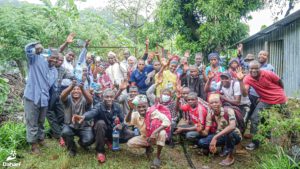
Grégoire Bianchetti is a biology student at the University of Angers. He chose Dahari for his final-year internship. His primary mission is to set up a varietal screening experiment to identify the varieties best suited to the needs of producers.
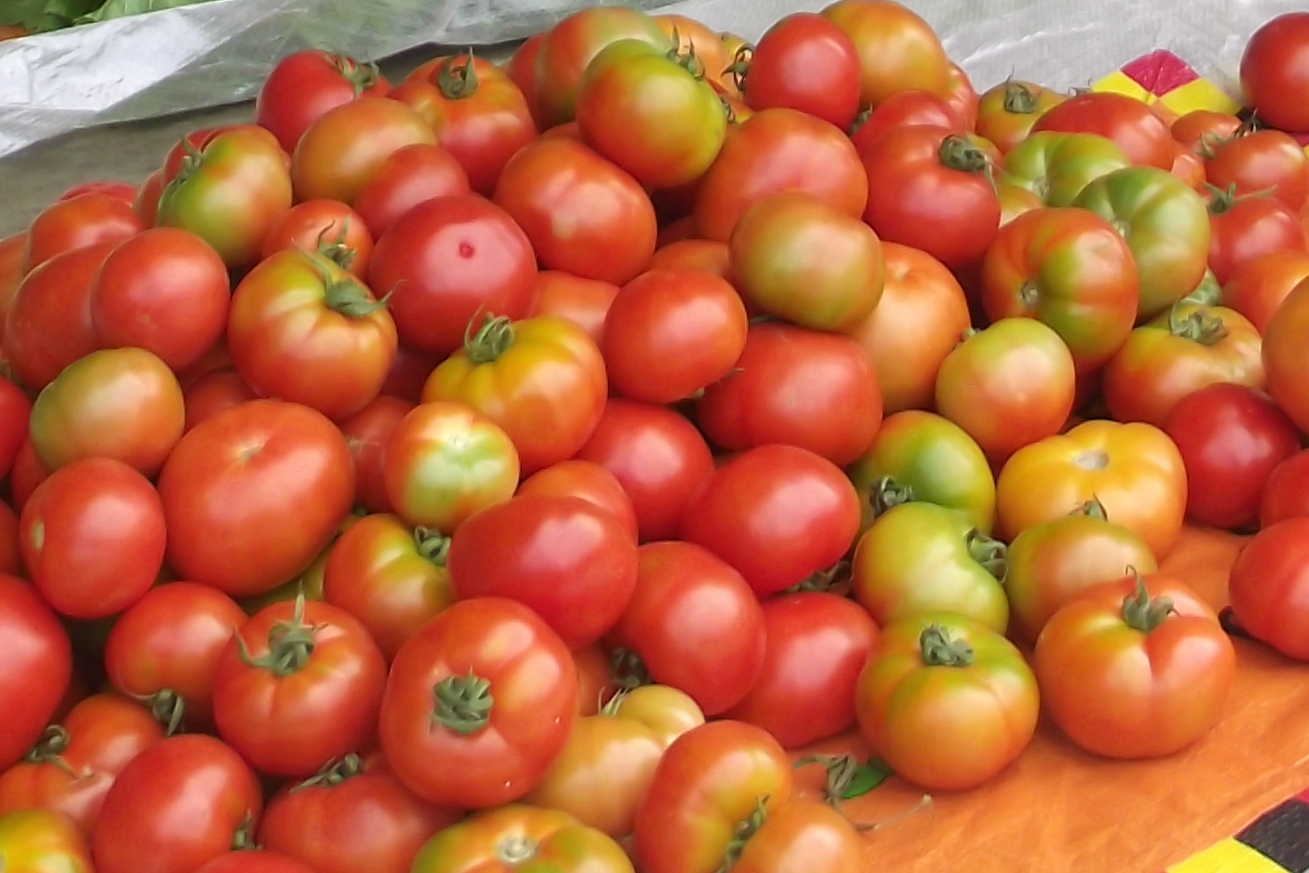
Tomatoes, the leading vegetable crop in the Comoros
On the island of Anjouan, tomatoes are grown year-round. The harvest takes place two to three months after planting, making it an easy vegetable crop to integrate alongside staple food crops. Tomatoes are most abundant on the market between May and August, selling for 200 to 500 francs per kilogram. During the dry season, they are cultivated less extensively and are therefore more expensive; the price can rise to over 1,000 francs per kilogram.
Tomato crops are primarily threatened by flies, slugs, viruses, and bacteria. Growers in Anjouan predominantly plant 'Mongal' variety tomatoes in low-altitude plots, and 'Floradae' in high-altitude areas. The experiment conducted by Grégoire during his internship aims to test four new tomato varieties, comparing their resistance to various threats and their adaptability to the climate of Anjouan.
2712
 The varietal screening experiment
The experiment was set up by Dahari, following a recommendation from CIRAD. It was conducted on a plot at the Regional Center for Economic Development (CRDE) in Salamani. Three individuals worked on the technical implementation of the variety screening: Grégoire, along with the site manager, Inzou Ali, and CRDE worker Hachim Saïd Ali. On a 75m² plot characterized by high humidity and partial shade, they planted 200 tomato plants representing four different varieties: one local variety (Mongal) and three imported varieties (Kiara, Cobra, and Rodéo). The tomato plants were planted during the week of April 15th and grew under identical conditions—receiving an application of manure prior to planting, with no pesticides or fertilizers used. Data on their development were collected weekly until the week of June 8th. The criteria monitored during the experiment included productivity, disease resistance, flavor (assessed via a post-harvest taste test), and resistance to transport.
The results of the experiment
Among the four varieties tested during this varietal screening, Grégoire highlights the strong performance of the ‘Cobra’ variety, which, over the course of several weeks, proved to be the best suited to the conditions of the CRDE plot. This variety showed the greatest resistance to pest and disease attacks and exhibited the most rapid growth, resulting in vigorous, lush, and healthy plants.
Grégoire strongly advises against using the ‘Rodéo’ variety for plots like the one at the CRDE, which are located at low altitudes. The plants have no resistance whatsoever to diseases or pests, flowering occurs late, and the plants themselves are stunted. The ‘Rodéo’ variety fails to develop properly at such altitudes.
Finally, the Mongal and Kiara varieties exhibited relatively similar development, growth, and phytosanitary status throughout the experiment. During the final weeks of the trial, the Mongal variety slightly outperformed the Kiara variety.

Summary table of the experiment results at the end of the 5th week
 Grégoire’s recommendations
"It is relatively early to address the initial objective, which was to recommend one of the four tested varieties to producers. By the end of my internship, I was unable to evaluate the firmness and taste of the fruit, as some of the varieties had not yet produced any."
Thus, if a grower were to ask me which of these four varieties to choose for a low-altitude plot, I would certainly advise against using the ‘Rodéo’ variety. I would then suggest that they plant the majority of their plot with ‘Mongal’—a variety already proven in the Comoros—to ensure a successful tomato harvest.
“Finally, as a first step, I will suggest that he cultivate the ‘Cobra’ variety on a small plot, as it seems promising.”